


Ontario Animal Health Network (OAHN) Public Health Update 2026
What is the OAHN Public Health Update?
 The Ontario Animal Health Network (OAHN) was created to achieve coordinated preparedness, early detection, and response to animal disease in Ontario. OAHN is a “network of networks” with individual networks for different species/sectors, each of which involves collaboration among veterinarians, animal owners and stakeholders in the field with laboratory, academic and government experts. This annual update was created especially for public health professionals in Ontario, to highlight pertinent topics from the last 12 months from the OAHN companion animal and other species networks, to help strengthen the link and communication between animal health and public health networks.
Update: Rocky Mountain Spotted Fever, Long Point ON (S2 2026)
A serosurvey for R. rickettsii antibodies in dogs in the Long Point area was conducted this summer as part of an OAHN project lead by Dr. Scott Weese, following the detection of multiple cases of Rocky Mountain Spotted Fever (RMSF) in dogs and people associated with this area in 2025. Preliminary results indicate that 12.7% of the dogs tested in May/June were previously exposed to the pathogen. Tick dragging in the area also detected positive D. variabilis ticks, but at a lower prevalence than in 2025. The question now becomes whether and how far the pathogen has spread beyond this region in Ontario. Be on the lookout for a project summary and follow up from OAHN.
Tick checks are especially crucial (for dogs and people!) to prevent RMSF, because this pathogen transmits relatively quickly once ticks attach; common tick preventatives for pets may not provide effective protection.
Still on the lookout for HPAI (S3 2025, S2 2026)
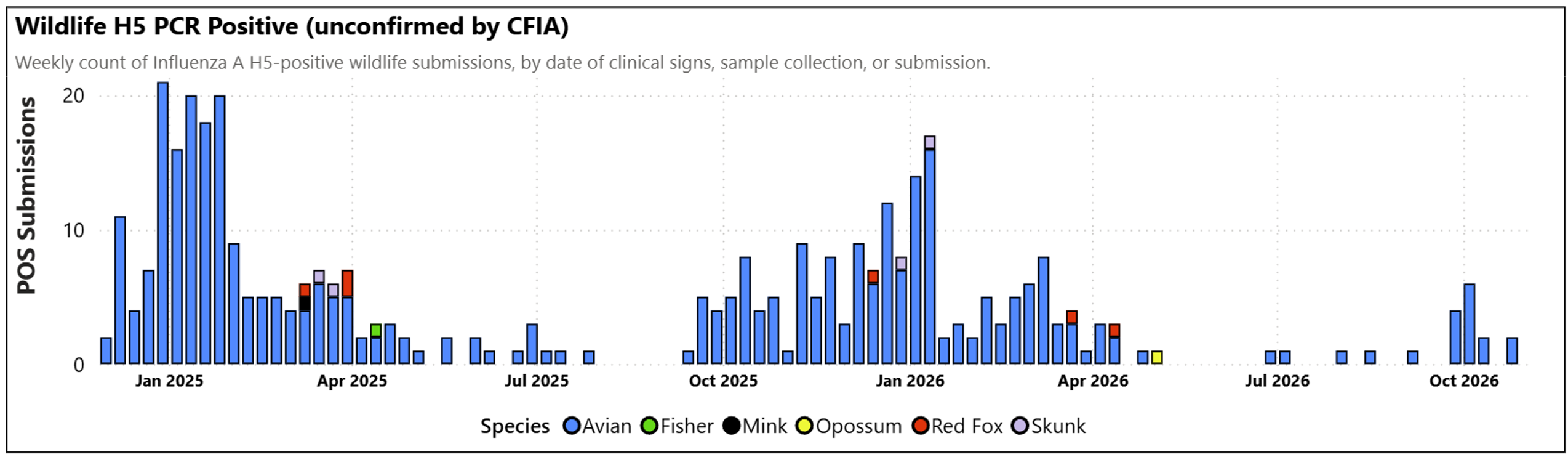
After a quiet 2026 with just one confirmed case of highly pathogenic avian influenza (HPAI) H5N1 detected in commercial poultry in Ontario in mid-February, the fall wild bird migration season is upon us again. Cases in Western Canada are on the rise, and a new HPAI case was detected in an Ontario small flock in late October, as wild bird cases also began to increase again (see graph). It is important to remain vigilant for cases in pets and livestock (especially cats and dairy cattle), and to use sound every-day infection control practices to avoid potential transmission of any flu viruses between animals and people – including seasonal flu, so get your flu shot! A recent paper from California highlights the risks of zoonotic transmission between affected cats and veterinary staff.
For the last 3 years, OAHN has been partnering with the Canadian Wildlife Health Cooperative and the CFIA to perform influenza A surveillance testing in at-risk feral / outdoor cats and cats submitted for rabies testing. To date, close to 1000 samples have been tested through this project and all have been negative (the last positive cat detected in Canada was in Saskatchewan in April 2026). The project is set to wrap up in December.
The outbreak of H5N1 influenza A in dairy cattle in the US has now affected over 1200 herds in 22 states. Cases have dropped off dramatically since the outbreak began in 2024, but there has been an increase in affected herds in some states again this fall. As of November 2026, H5N1 flu has yet to be detected in dairy cattle or dairy products in Canada, following testing of almost 13,000 raw milk samples collected at processing plants representing milk from approximately 2700 dairy farms across the country. The same strain circulating US dairy cattle was recently identified in an ongoing 2-month long H5N1 flu outbreak on a mink farm in Utah, which is especially concerning because mink are also susceptible to human seasonal flu viruses, thus increasing the risk for a reassortment event that could result in easier transmission to and between humans.
Occasional spillover infections of avian flu (H5N1) from wild birds into wild mammals in Ontario continue to occur as well, including in the past year 3 red foxes, 1 skunk, and 1 bobcat. The graph shows all Ontario wildlife H5 influenza A PCR detections since December 2024, most of which were confirmed as H5N1, but includes some that were other strains or that were ultimately inconclusive.
Small Ruminant: Coxiella burnetii (S2 2026)
Coxiella burnetii, the cause of Q-fever in humans, is a bacterium commonly found in sheep, goats, and cattle. Sheep and goats in particular may shed large quantities of the bacterium during lambing and kidding, particularly following abortions or stillbirths, and may continue to shed it for weeks to months in vaginal discharge, urine, milk and manure. C. burnetii is very hardy and can persist for extended periods in manure and soil, and can be dispersed in dry, dusty, windy conditions, potentially exposing people and animals in surrounding areas, including neighbouring farms. It is also resistant to many common disinfectants.
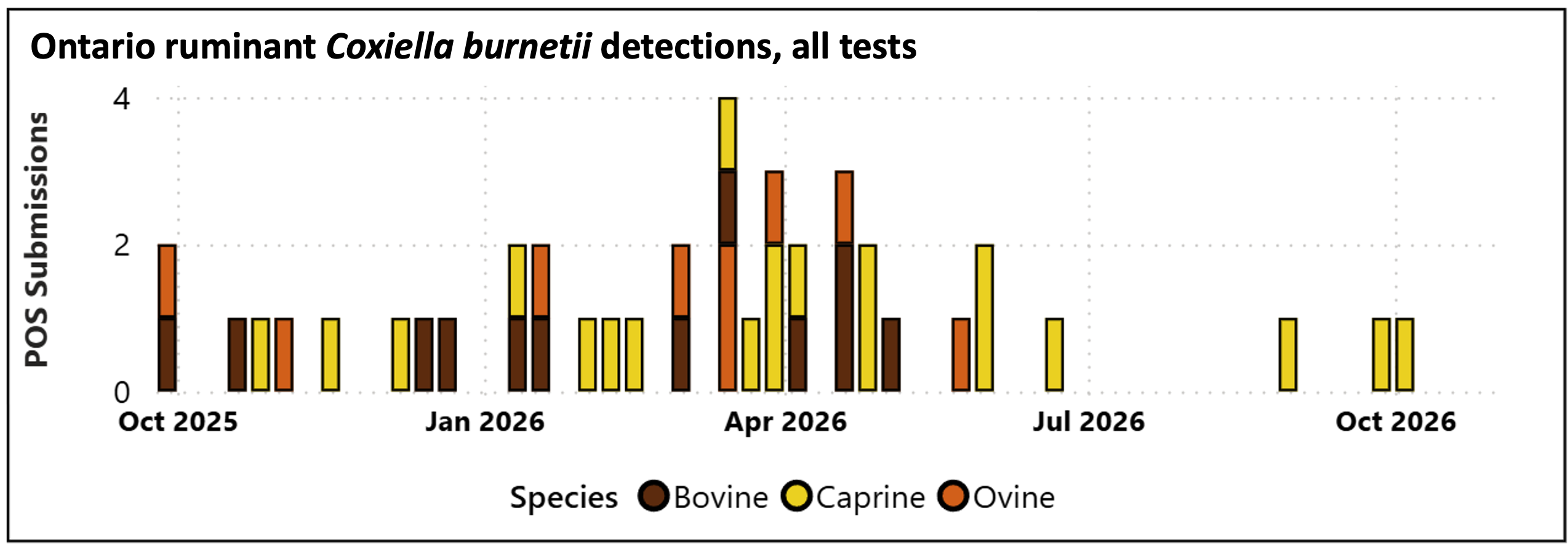
Coxiella burnetii in animals is immediately notifiable to OMAFA (see graph). There were 177 detections in small ruminants reported from 2021-2025, but these data are difficult to interpret as only a small proportion of small ruminant abortions are submitted for diagnostic testing, and C. burnetii is most often an incidental finding during diagnostic investigations for other conditions not caused by this bacterium. Herd-level studies in Ontario livestock found C. burnetii to be widespread, with prevalence estimates ranging from 42% to 77% in sheep flocks, goat herds and dairy cattle herds.
Although human Q-fever is relatively uncommon in Ontario (6-14 cases reported annually since 2020), livestock exposure remains an important source of infection, particularly for people with occupational or recreational contact with ruminants. Members of the public may be exposed when visiting petting zoos, agricultural fairs, educational farm tours, or other interactive livestock exhibits. There is no regulatory requirement to test livestock for C. burnetii before public exhibition, and given its high prevalence and ability to persist within herds and flocks, testing is unlikely to effectively reduce public health risk. Livestock owners and event operators should implement measures to reduce the risk of transmission by preventing public access to animals around the time of birthing and to birthing areas, and by providing visitor access to handwashing facilities. Additional guidelines are available to help decrease the risk of infection in those with occupational exposure to high-risk species.
Bovine: Asian longhorned tick US expansion, risk to Ontario (S2 2026)
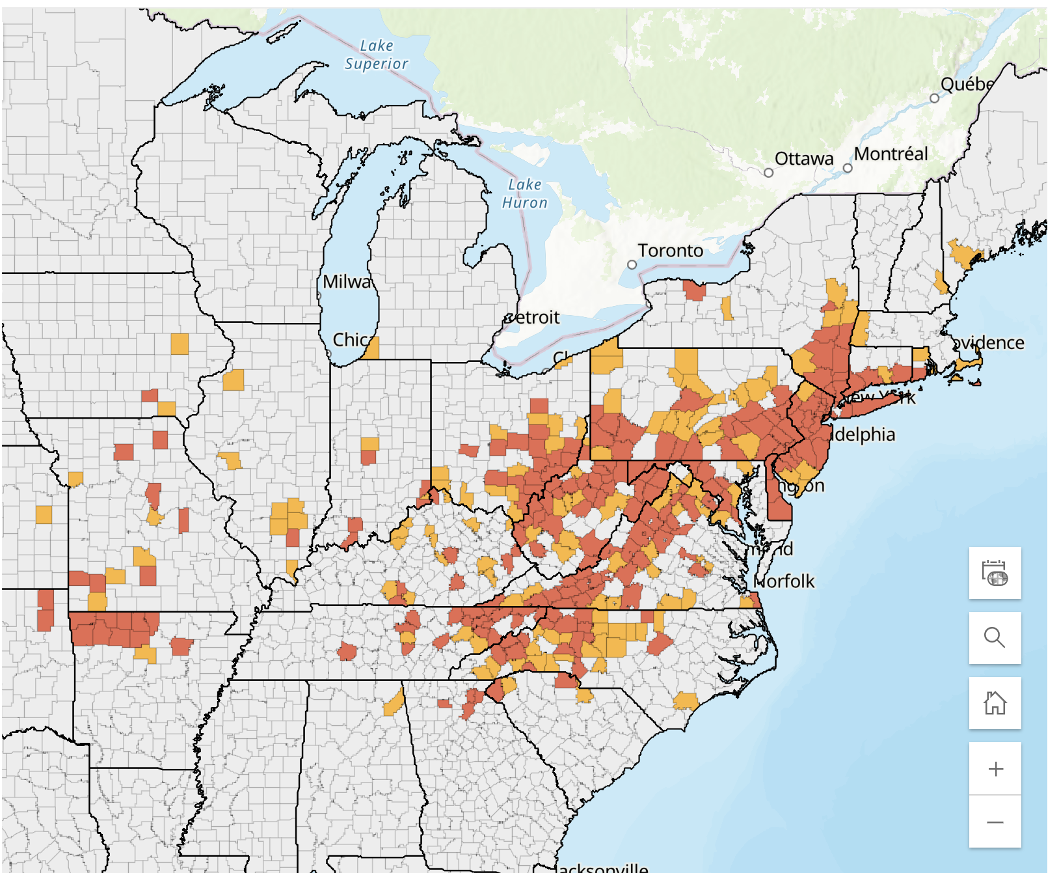
The Asian longhorned tick (ALHT), Haemaphysalis longicornis, is an invasive tick species that has been spreading rapidly across the US since its initial detection in 2017. ALHT has now been reported in at least 27 states and the District of Columbia, including Michigan and New York which border Ontario (see map). Although ALHT has not yet been detected in Canada, it has been identified on US cattle presented for importation at the border (which were therefore refused entry).
Although ALHT prefers mild temperatures and humid climates, it has adapted to live in a wide range of environmental conditions, and it can survive colder temperatures through diapause. ALHT also feeds on a wide variety of hosts, including cattle, sheep, goats, dogs, horses, humans, birds, deer and other wildlife; any of these animals crossing the Canadian border from affected regions could carry ALHT with them. This tick can also reproduce asexually (via parthenogenesis), so a single female tick can establish a new population all by herself, without mating.
The primary animal health concern associated with ALHT is transmission of Theileria orientalis Ikeda, one of the protozoan parasites that causes bovine theileriosis. This disease can cause severe or even fatal anemia in cattle, particularly in naïve populations, but it is not a risk to humans. Fortunately, ALHT is not a competent vector for Lyme disease, human granulocytic anaplasmosis, or tularemia. However, experimental studies have demonstrated that ALHT is capable of transmitting Rocky Mountain spotted fever, Heartland virus, and Powassan virus, which can infect people.
As the range of ALHT continues to expand, it will no doubt reach the Canadian border. Surveillance, awareness, and biosecurity measures will be important for early detection and limiting its spread. The Canadian Animal Health Surveillance System has ALHT resources for livestock owners, horse owners, pet owners, and wildlife professionals on the CAHSS vector-borne diseases webpage.
Borrelia & Anaplasma serotrends (S3 2025)
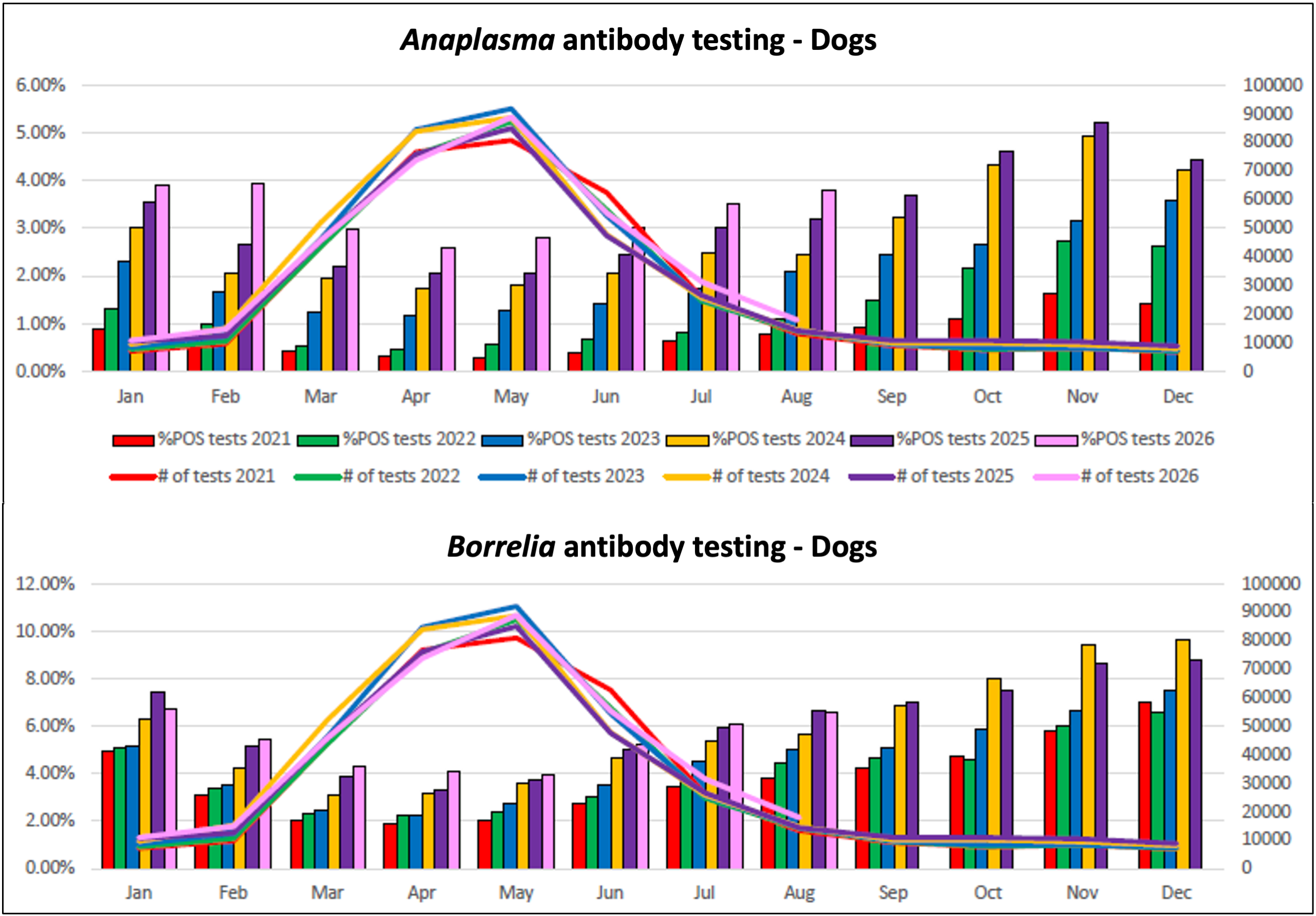
CAPCvet.org publishes monthly maps based on serological and fecal testing of select pathogens in dogs and cats by some of the major diagnostic labs in the US and Canada. Although the data only represent a fraction of the testing done in each area (estimated at approximately 30%), they still provide useful insight into local parasite activity. OAHN also posts graphs of these data for Ontario to help visualize trends over time. Check them out!
In the last 5 years, annual testing numbers have been very consistent, with the most testing in the spring, but there has been a steady increase in the annual percent seropositivity among dogs for both B. burgdorferi (the cause of Lyme disease) and Anaplasma spp. (approximately 2% for each in total). This fits with the OAHN clinical impressions survey results, in which respondents regularly comment on increasing rates of exposure to (and sometimes clinical disease from) these pathogens.
Echinococcosis: New pups & rescue dogs (S2 2026)
Intestinal Echinococcus multilocularis (EM) infection has been detected in a record 8 Ontario dogs (from January-October 2026), 6 of which were 4 months of age or younger, and at least 6 of which had recently been purchased / rescued from western Canada, where the prevalence of EM is higher. New dog owners should be alerted to the risk of EM and have at-risk dogs tested for tapeworms and other parasites. Treatment (and prevention in high-risk dogs) of intestinal EM is fairly straightforward using a product containing praziquantel (there are several on the market with label claims).
Remember that dogs are typically infected by eating rodents, but it is the eggs in the dog’s feces that are infectious to people, leading to the extra-intestinal form (alveolar echinococcosis, AE). Dogs can occasionally also develop AE from ingesting large numbers of eggs (e.g. from eating feces from other infected canids). This form of infection tends to have a slow insidious onset, and is significantly more difficult to treat than intestinal infection. Don’t eat poop! Remember EM is immediately notifiable to OMAFA in Ontario, and veterinarians must also report any confirmed cases to their local public health unit.
Summer import risk: Screwworm (S1 2026)
Valiant efforts continue to be made to keep New World Screwworm at bay in the sourthern US, but in June 2026 the first cases were detected in Texas and New Mexico where it has now been reported in cattle, sheep, goats, horses, dogs and an elk. In late October, the first case of NWS in Arizona was identified in a dog. Although NWS cannot survive in Canada over the winter, during the summer it would be possible for the fly to complete several life cycles and infect local animals (and people). Veterinarians and animal owners must continue to watch out for suspicious nasty wounds in pets coming from affected US states, Mexico and areas further south.
As of fall 2026, Canadian import restrictions remain in place for livestock (including horses, cervids and camelids) but NOT for pets. Although there are no drugs in Canada labelled for use against NWS in pets, there are several products available on the market that can be effective aids in prevention and treatment. Don’t let those maggots reach the ground! CAHSS also has some good NWS infographics for animal owners that may travel to or from high risk areas with pets, horses or other livestock. NWS is an immediately notifiable disease in Canada.
Blastomycosis: Increased risk in NY (S1 2026)
While blastomyosis is not considered endemic in upstate New York, analysis of 54 laboratory confirmed cases in humans over the past decade suggest the risk is increasing over time. Be aware of the risk in people and pets travelling to NY, in addition to the “traditional” high risk areas in Ontario (e.g. Northwest, Manitoulin, Ottawa).
Wildlife rabies update (S3 2025 – S2 2026)
Quebec and northern New York State continue to battle a raccoon-variant rabies outbreak that has seen multiple incursions across the Canada-US border. Although no non-bat variant cases have been detected in Ontario since 2023, a significant number of raccoon-variant cases have been found across the river along our Eastern border. The Ontario Ministry of Natural Resources has increased their wildlife oral rabies vaccine (ORV) baiting efforts in key areas of Eastern Ontario.
The finding of three cases of cats with raccoon-variant rabies in Quebec and two skunks in British Columbia (in September and October) with bat-variant rabies in 2026 are important reminders that spillover infections of any strain can occur in any mammal.
The last case of fox variant rabies in southern Ontario was detected in 2018, but it remains endemic in the north. Dogs translocated from northern regions (or imported from countries at high risk for canine variant rabies) are at risk for developing rabies for 6 months from the last day they were potentially exposed and were not currently vaccinated (which might be the day they were transported).
Although the final numbers have yet to be tabulated, it was a record summer for rabies response calls on both the veterinary and public health side of things. An increase in reported potential exposures (not cases) was also reported in the US. However, in Ontario there were actually fewer positive bats in July/August 2026 than the same period in 2025 (38 vs 72). This is in part due to lower testing numbers, likely because of stricter adherence to risk assessment guidelines, implemented to avoid overwhelming our decreased laboratory capacity. Know what bat encounters are and are not considered a significant risk for rabies transmission, for both people and pets!
Remember that all dogs, cats and ferrets in Ontario over 3 months of age must be vaccinated for rabies by a veterinarian in Canada or the US, regardless of any other rabies vaccines received overseas. Almost ALL dogs and cats – even if currently vaccinated – require a rabies booster within 7 days of a bat exposure, unless the bat can be tested (and is negative) within this window.
NEVER put a live bat in the freezer. Contacts for humane euthanasia of bats (and other animals for rabies testing) can be found on the OAVT Rabies Response Program (RRP) website.
Rabies response and control in Ontario is a joint effort involving the public, animal owners, veterinarians, animal and wildlife control organizations, public health units, the Ontario Ministry of Agriculture, Food and Agribusiness (OMAFA) and the Ministry of Natural Resources (MNR). The MNR maintains an interactive Ontario rabies surveillance map and posts annual maps of rabies cases in Ontario (including bat and non-bat rabies cases) and details of all annual rabies control operations.
REMEMBER: Owners who have a concern about potential exposure of one of their animals to rabies should always be referred to their local veterinarian FIRST. Additional detailed rabies response information for veterinarians is available on the Ontario Rabies: information for veterinarians page.
Complaint to stop raw pet food company, US (S2 2026)
In August, the US Department of Justice filed a “complaint” to shut down manufacturing and sales of a raw pet food company, after failure to respond to repeated warnings from the FDA, based on finding Salmonella, Listeria, and STEC in product samples, with links to multiple human illnesses. The infectious disease risks from feeding raw diets are clear, and they are exacerbated by companies that fail to take responsibility for (or even acknowledge) the risks from their products by issuing recalls when warranted, and trying to improve their manufacturing processes for the safety of pets and the people around them. If you have clients that still want to feed their pets raw diets, make sure they know the risks and how to mitigate them. There is lots more information on the Worms & Germs Blog, and the OAHN / W&GB raw meat diets infosheet.
PHAC has posted a summary of the 2025 Salmonella outbreak in people in Canada associated with raw dog food and treats.
The investigation wrapped up in January 2026, following a product recall.
Update: Lyme disease infographic (S2 2026)
OAHN has once again updated its infographic for veterinarians on ticks and Lyme disease in Ontario with the latest risk area map for Ixodes spp. ticks from PHO. It also has quick tips on monitoring, screening, and when not to treat dogs.
IN THIS ISSUE
-
- What is the OAHN Public Health Update?
- Update: Rocky Mountain Spotted Fever, Long Point ON (S2 2026)
- Still on the lookout for HPAI (S3 2025, S2 2026)
- Small Ruminant: Coxiella burnetii (S2 2026)
- Bovine: Asian longhorned tick US expansion, risk to Ontario (S2 2026)
- Borrelia & Anaplasma serotrends (S3 2025)
- Echinococcosis: New pups & rescue dogs (S2 2026)
- Summer import risk: Screwworm (S1 2026)
- Blastomycosis: Increased risk in NY (S1 2026)
- Wildlife rabies update (S3 2025 – S2 2026)
- UComplaint to stop raw pet food company, US
(S2 2026) - Update: Lyme disease infographic (S2 2026)
USEFUL LINKS
Companion Animal NETWORK TEAM:
- Eastern ON: Dr. Julie Calvert
- Southern ON: Dr. Emma Webster
- Northern ON: Dr. Hailey Bertrand
- GTA ON Dr. Donia Eino
- Animal Health Lab: Dr. Kris Ruotsalo Dr. Emily Brouwer
- Ontario Vet College: Dr. Scott Weese Dr. Matt Kornya
- OMAFA: Dr. Maureen Anderson Dr. Hannah Golightly
- Network coordinator: Dr. Tanya Rossi