
Ontario Animal Health Network (OAHN) Swine Network Quarterly Veterinary Report
Porcine Epidemic Diarrhea Virus (PED) and Porcine Deltacoronavirus (PDCoV) Ontario Update
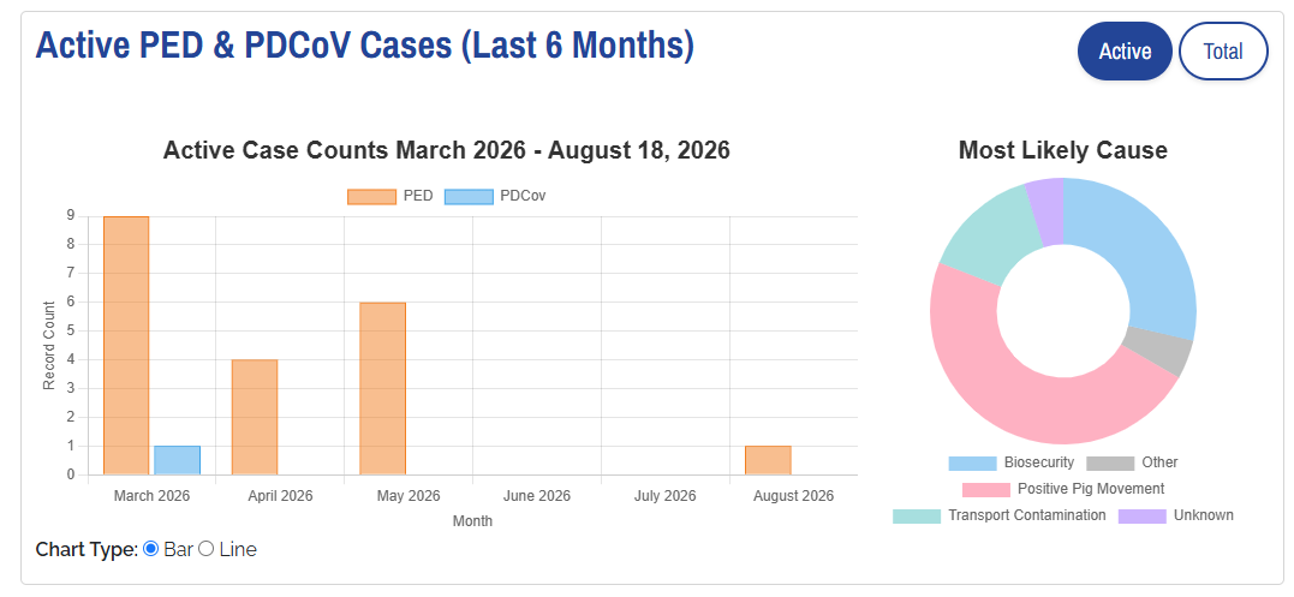
Jessica Fox from Swine Health Ontario (SHO) provided an update on PED and PDCoV cases in Ontario for Q2 of 2026. New positive cases of PED and PDCoV dramatically dropped off after March, with only 10 cases of PED and no new PDCoV cases. Of these new positive PED cases, the affected herds included 1 farrow to finish site, 1 farrow to wean site, 3 nurseries, 5 finishers, and 1 gilt breeding barn. In previous years, following a large winter outbreak, there has been a secondary spike in the spring as a result of PED-positive manure being spread. This was not seen this year, which Jessica attributes to producers being extremely mindful about manure movements and barn biosecurity.
Jessica also provided an update on the SHO PED working group, which has been meeting regularly over the past months to strategize on how to reduce provincial PED and PDCoV cases in the future. SHO will be holding producer meetings in the early fall to continue communication and information sharing with the industry, specifically producers, ahead of the cold weather. The goal of these meetings is to continue to keep the PED, and PDCoV risk factors top of mind as the winter season approaches, in hopes that producers will be prepared ahead of the usual PED season to reduce the total number of new positive cases. SHO will be providing more details about these meetings in the coming weeks.
OAHN Veterinary Clinical Impression Survey Veterinary Comments
Dr. Maggie Henry provided a summary of the results from the clinical impressions survey from Q2 of 2026.
In the multi-systemic category, 21% of respondents felt there was an increase in Erysipelas, Glassers, and PCV-2 this quarter. 14% of respondents also perceived an increase in PCV-3 cases during the quarter. One practitioner commented that they saw an increase in condemnations at shipping as a result of erysipelas and was concerned that there was an increase.
For respiratory diseases, 64% of participants noted an increase in PRRS in breeding herds, which is the most significant clinical increase noted by practitioners this quarter. 29% of total respondents also felt an increase in PRRS in growing herds. For Influenza, 35% of participating practitioners felt that cases had increased this quarter, and a practitioner commented that they had three herds break with pandemic strain Influenza during the quarter.
Regarding gastrointestinal illness, two of the 14 respondents noted an increase in ascarids this quarter, with one practitioner commenting that they have experienced two cases of verminous pneumonia in the past 6 months. 14% of participants also noted an increase in hemorrhagic bowel syndrome, with one practitioner noting that the outbreak they experienced was a result of feed line issues in the herd. Although PED and PDCoV cases played a less significant role this quarter, a practitioner commented that ongoing eliminations from the winter continue through Q2 and that certain farms are tougher to get fully empty or clean (usually because of older facilities). Exudative epidermatitis was another clinical concern of note, with 43% of responding practitioners reporting an increase this quarter. There were also two practitioner comments that indicated an increase in rectal prolapses this quarter in finishing barns, indicating that these cases appeared across multiple unrelated sites.
Animal Health Laboratory Immediately Notifiable Disease Review
Drs. Maggie Henry and Bukunmi Odebunmi from OMAFA provided a summary of the Influenza and Salmonella cases received by the AHL during Q2 of 2026.
Influenza A (IAV)
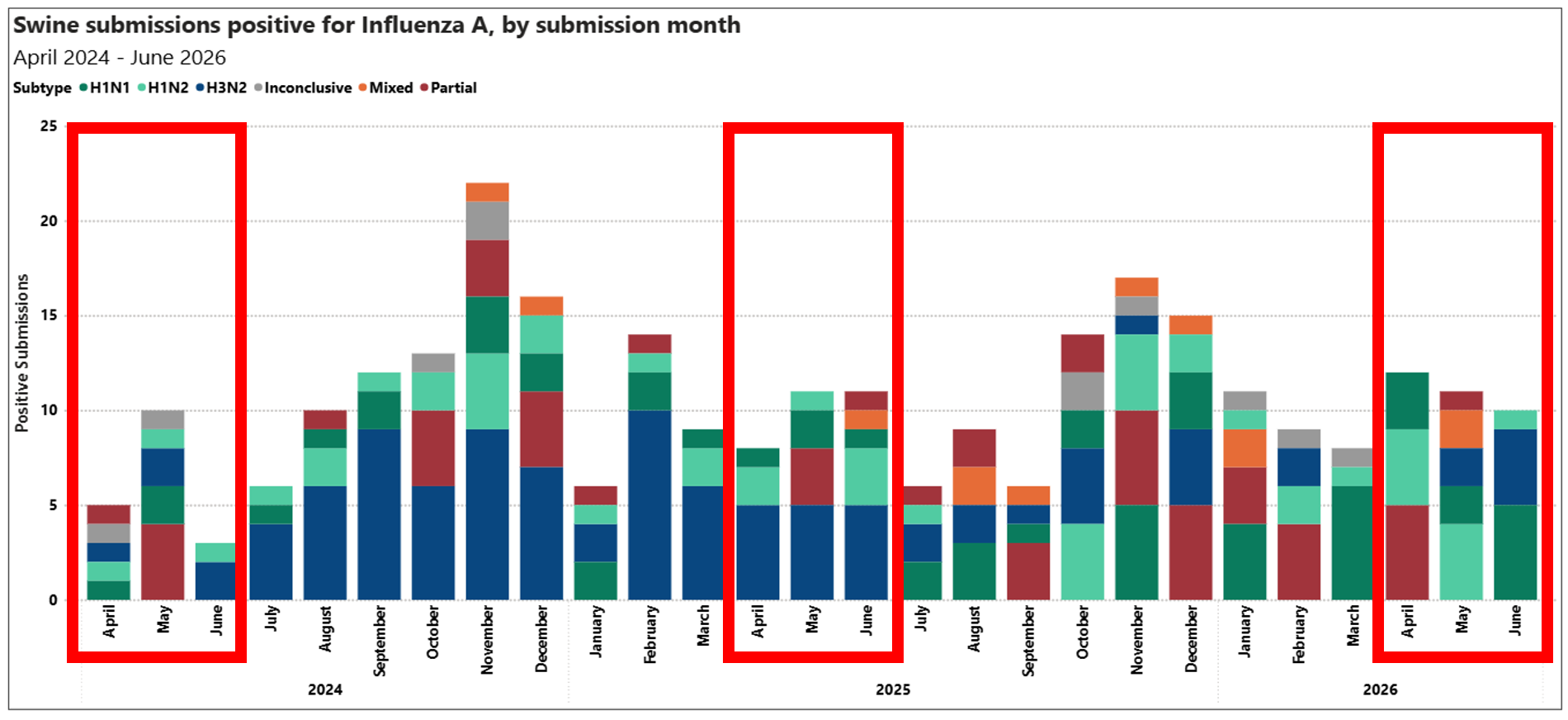
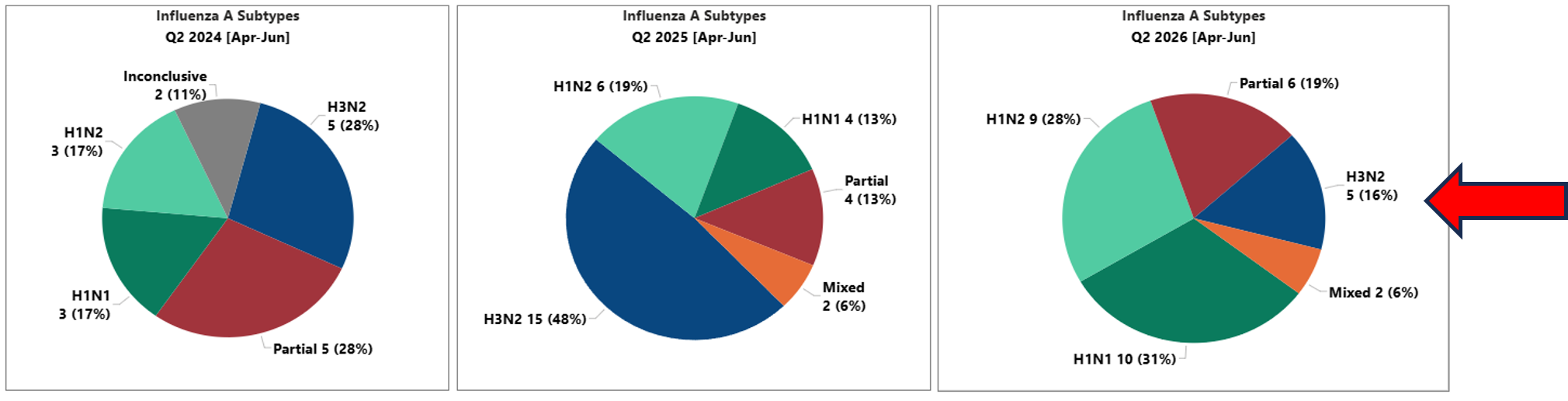
During Q2 of 2026, there were 32 positive submissions. This is similar to Q2 of 2025, with 30 positive submissions, but higher than Q2 of 2024 with 18 positive submissions. During Q2 of this year, positive submissions were primarily of the H1N1 subtype (31%), followed by H1N2 (28%). This quarter, the majority of positive submissions were from the grow-finish stage of production. Most of the H1N1 isolations this quarter were of the pandemic clade, and the majority of the H1N2 submissions were of the alpha clade.
Salmonella
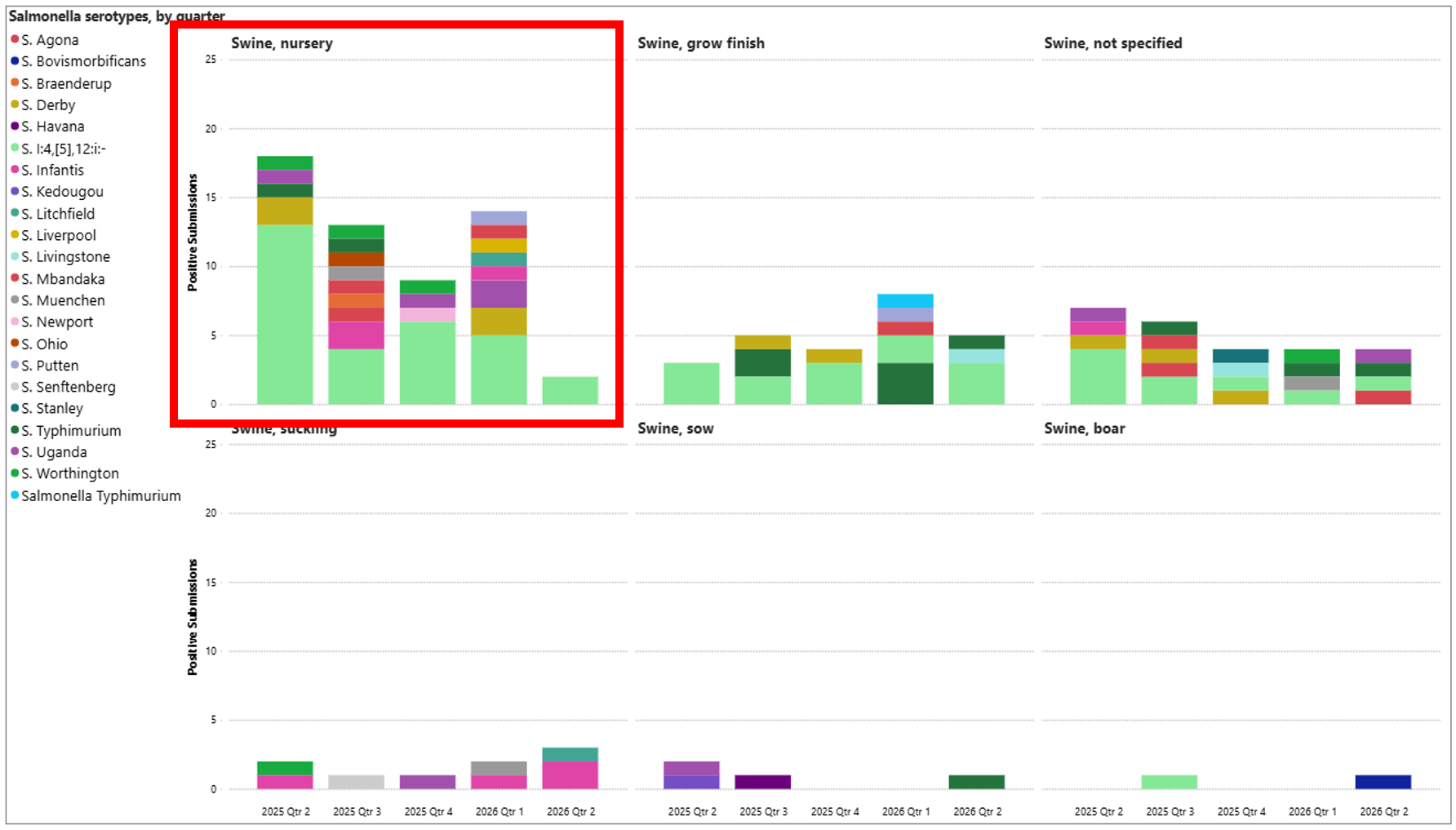
In Q2 of 2026, the Salmonella submissions were relatively stable across the quarter, with a total of 24 positive submissions. There were less total positive submissions compared to Q2 of 2025, which had 32 positive submissions and a pronounced peak of positive cases in May. The majority of positive Salmonella submissions this quarter reported a history of gastrointestinal clinical signs. The monophasic Typhimurium variant was the most commonly isolated serotype during the quarter, and this was the case for both IFE and non-IFE submissions. Most positive submissions in Q2 2026 were from the grow-finish stage of production.
Laboratory Diagnostic Reports
Animal Health Laboratory (AHL)
Drs. Rebecca Egan and Tim Pasma from the Animal Health Lab (AHL) provided an update on pathology cases received by the lab during Q2 2026.
The AHL received a total of 1513 swine cases during this quarter. Of these, 101 cases had a pathology component. A good (77%) or adequate clinical history was included for 96% of this quarter’s pathology cases, which is similar to Q1 and lower than all quarters in 2025. Age group and PID inclusion rates for Q2 were good and notably low, at 94% and 76%, respectively (PID inclusion ranged from 82 to 99% across 2025). Practitioners are strongly encouraged to include an informative clinical history and age group for all pathology submissions, in addition to providing the PID.
Trends and interesting cases from 2026 Q2 are as follows:
- Influenza A-positive case numbers in Q2 2026 were slightly higher (50 cases) than Q1 (43 cases), and comparable to Q2 of 2025 (49 cases). H1N1 and H3N2 were dominant with 21 cases of each (H1N1 with 16 typed as pandemic and 5 as classical [2 alpha and 3 beta], followed by H1N2 (17 cases).
- PRRSV was detected by PCR in 226 cases (183 diagnostic, 43 monitoring, 0 research), representing an increase from 191 positive cases in 2026 Q1 and notable increase from 159 cases in 2025 Q2. Pathology cases with a PRRSV associated pneumonia diagnosis was steady at 19, 21, and 20 cases in Q2 2024, 2025, and 2026, respectively.
- One submission was positive for both porcine astrovirus type 4 (three pigs, Ct=30) and PPIV (one pig, Ct= 30). These were grower/finisher pigs with mild neutrophilic bronchointerstitial pneumonia, and concurrent testing negative for PRRSV, influenza A, PCV-2 and Mycoplasma hyopneumoniae. The clinical significance of these detections is uncertain.
- PCV-2 was detected in 13 cases (8 PCR and 5 IHC). Of the PCR detections, 3 were subtype d, 2 were subtype a, and 1 was subtype e. This subtype has been detected at the AHL in approximately 10 cases since 2010.
- In Q2 2026, there were 21 porcine sapovirus PCR-positive submissions, representing 64% of the submissions tested. Porcine Sapovirus Genogroup III VP1 Sequencing was performed in one case of severe post-weaning scour, with Ct= 29 from a pooled intestinal sample. There was concurrent rotavirus detection (A, B, C with Ct= 15, 29, 29, respectively) with sequencing also performed, and histopathology identified atrophic enteritis.
- There was a total of 6 abortion cases in 2026 Q2 compared to 3, 5, and 7 cases in Q2 of 2023, 2024, and 2025, respectively. Of these, 2 cases had a presumed bacterial component, and 4 were idiopathic. Bacterial agents associated with abortion were Streptococcus suis, Actinobacillus rossii, and Streptococcus dysgalactiae subspecies equisimilis.
- One porcine sapelovirus positive submission (Ct = 28.47). Nursery pigs with neurological signs. There was no pathology component or other testing for this submission. The clinical significance of this detection is therefore uncertain. The first confirmed case of porcine sapelovirus polioencephalomyelitis in Ontario was in 2020 (AHL newsletter article: https://www.uoguelph.ca/ahl/first-confirmed-case-porcine-sapelovirus-polioencephalomyelitis-ontario).
Ontario Slaughter Statistics
Dr. Christine Pelland provided an overview of the slaughter data from Q2 of 2026.
Federal Slaughter Statistic Summary (Q1 Aggregate)
When comparing Q2 to Q1 of 2026, in total, there were 84,738 fewer animals slaughtered in Q2, with 44 fewer total condemnations. There was a reduction this quarter in number of condemnations due to erysipelas (-4.1%), enteritis (-2.3%), moribund (-2%), and hematoma (-1.4%). There was an increase in condemnations due to peritonitis (+6%), icterus/jaundice (+2%), and abscess (+1.2%). There were 1,673 fewer animals with trims in Q2 of 2026 compared to Q1 of 2026. There was a reduction in trims due to abscesses and arthritis, whereas there was an increase in trims due to “other” and mammary tissue.
Provincial Slaughter Statistic Summary
Based on the provincial slaughter data from Q2 of 2026, parasitic livers remain the most frequent cause of condemnation. Abscess and inflammatory conditions remain fairly equivalent in reason for condemnation and are the second most frequent causes of condemnation. Please note: the Q2 data excludes June data, and it will be reported in the Q3 2026 data.
CanSpotASF Surveillance Update
Dr. Maggie Henry provided an update on the CanSpotASF surveillance submissions. Ontario samples submitted for CanSpotASF testing in 2026 Q2 included:
- Laboratory samples submitted by vets/pathologists: 14
- Provincial Abattoirs: 17
- Federal ON Abattoirs: 61
- Invasive Wild Pigs: 3
This quarter, Ontario has achieved the highest number of provincial abattoir submissions to date of any province. All samples tested under the CanSpotASF surveillance program have yielded negative ASF results.
OAHN Projects- Now Accepting Samples!
Dr. Rebecca Egan provided an update on the current OAHN swine projects. Reminder project #1 on PCV-2 and project #2 on Sapovirus are both open and accepting samples! Please consider both when completing herd visits and/or performing PM exams. Both projects will be running until December 2027 or until sample quotas are met, so practitioners are encouraged to participate when they have eligible cases.
Project #1- This project aims to assess Porcine Circovirus type 2 (PCV-2) prevalence in the Ontario herd, specifically with respect to the different PCV-2 subtypes. PCV-2 PCR-positive samples submitted to AHL are eligible, and this project will sequence these samples to determine subtype. These results will allow for better understanding of the distribution of different PCV-2 subtypes within the province. A short survey will accompany these submissions to better understand the clinical picture of each case. To date, 40 cases have been tested for PCV-2 under this project. PCV-2d was identified in 19 cases (47.5%), making it the predominant genotype. PCV-2a was detected in eight (20%) cases. Eleven cases (27.5%) were untypable, most commonly due to concurrent detection of PCV-1, which interfered with sequencing and typing. One result is still pending.
Project #2- This project focuses on the neonatal diarrhea complex and the role of Sapovirus in these cases. Eligible cases will be those with piglets less than 20d of age presenting with a clinical scour and an accompanying Sapovirus PCR-positive result. A specific AHL submission form and samples (3 fecal samples PER PIG) are required for enrollment in this project, in addition to completion of a short survey by the submitting veterinarian. Links to the submission form and vet survey can be found on the OAHN swine website. This project aims to provide a better understanding of how Sapovirus contributes to neonatal diarrhea cases, especially amongst other common pathogens. A total of 15 cases have been submitted to the Porcine Sapovirus project. Of these submissions, seven (46.7%) have tested positive for Sapovirus, all of which also tested positive for Rotavirus. Sapovirus ISH is pending to evaluate for presence and distribution of viral antigen within the intestinal lesions.
There are still submissions needed for this project, so if you have a case that fits the above description, please consider submitting. The study will cover all testing, totaling roughly $300-400 per pig! Any questions can be directed to Dr. Rebecca Egan eganr@uoguelph.ca.
Senecavirus A (SVA) Ontario Update
Jessica Fox from SHO provided an update on Senecavirus A (SVA) in Ontario for Q2 of 2026. The SVA surveillance project is currently underway. A total of 13 cases have been passively tested for SVA, all of which have tested negative. Cases are passively selected at AHL for testing if they follow the established criteria of scour cases in piglets 8 weeks and younger.
SHO and OAHN would like to encourage practitioners and producers to continue to monitor herds for clinical signs, as these can be extremely subtle. Older pigs tend to present with vesicular lesions on the snout and/or coronary band(s). In a sow barn, infections can present as a very subtle scour. (Source Poster below: Swine Health Ontario).
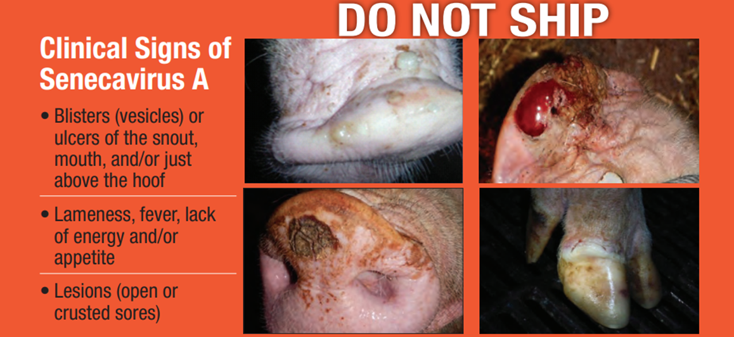
Producers and veterinarians in all provinces need to understand that SVA lesions can be mild and hard to notice in some animals. Diligence is required to check all animals for SVA type lesions including blisters, ulcers on the snout, ears, face, on the coronary band or between the claws on the feet before shipping them for slaughter, cull markets and/or directly for export to the USA. If a swine producer has any suspicion that there may be SVA in a swine herd, they are urged to contact their vet and the CFIA for follow-up steps!
International Disease Topics Of Interest Summary
Dr. Conor Voth reported on some interesting international disease surveillance reports.
An Emerging Parvovirus Associated with Exophthalmos in European Pigs
In December 2024, piglets aged one to four weeks on two Dutch pig farms developed bilateral exophthalmos (bulging eyes) and strabismus together with erythema and alopecia. Cases were reported to Royal GD through the national surveillance program, and by August 2025 more than 80 conventional herds had reported piglets with the same unusual signs. Affected pigs typically remained alert with normal body temperature. On one 850-sow farm approximately 15% of suckling piglets were affected, with signs appearing as early as 10 days of age, affecting one or two piglets in some litters and nearly whole litters in others. Weaned pigs developed conjunctivitis, corneal opacity and poor growth. Reported production effects included a mortality increase of about 6% on severely affected farms, weaning weight reduced by roughly 1 kg at 28 days and 10-week weight by about 2 kg, with estimated margin losses of EUR 1.11 to 2.95 per piglet, or EUR 34 to 84 per sow per year. Clinical signs diminished after three to four months without specific intervention.
Gross pathology of 20 piglets from seven farms was inconclusive, and testing for nutritional and toxicological causes and common pig pathogens, including porcine parvovirus 1 (PPV1), was negative or inconsistent. Nanopore sequencing of tissues from 18 affected and four unaffected piglets yielded near-complete parvovirus genomes from all affected animals, showing more than 98% nucleotide identity to a protoparvovirus previously detected in red fox feces in the Netherlands in 2012 and Croatia in 2016, now referred to as fox parvovirus (species Protoparvovirus carnivoran4). Real-time PCR was positive in all affected piglets, with the lowest cycle threshold values in liver and kidney, and in situ hybridization localized viral nucleic acid to the nuclei of hepatocytes and kidney epithelial cells. PCR-positive eye and skin tissues were negative on in situ hybridization, leading the authors to suggest the clinical signs are secondary to other pathophysiological processes. The virus replicated in swine testicular cells without cytopathic effect. Because it is genetically distinct from PPV1, cross-protection from routine PPV1 vaccination is expected to be low, and final proof of causality is still required.
In June 2026, 1.5 to 2% of piglets and weaners in a Danish herd of 920 sows showed the same signs; livers and kidneys from all six piglets necropsied tested positive. Screening of Danish wildlife detected the virus in one of two red fox fecal samples and in two of 80 fox spleens (2.5%), but not in raccoon dogs, otters, beech martens, badgers, pine martens or polecat. Viruses from the Dutch and Danish pig farms were 99.9% identical to each other and more closely related to one another than to local wildlife viruses, indicating an epidemiological link between farms and supporting a single introduction into pigs with subsequent spread between countries. Danish fox viruses were less than 95% identical to all others. Given the environmental stability of parvoviruses, the authors hypothesize environmentally mediated transmission between wild and farmed animals. The virus has since been reported from additional European countries. In Belgium, Animal Health Care Flanders reported a first detection in a piglet in Flanders in July 2026, confirmed on a spleen sample submitted for autopsy. Royal GD reported in July 2026 that the virus and the associated syndrome had also been found on farms in Germany, and PathoSense Diagnostics reported detection of the virus in Spain. Reported mortality has remained low in the countries affected to date, and Royal GD estimates that roughly 80% of Dutch pig farms have now been affected. Tobias, T. J., Renzhammer, R., Roos, C. A. J., Schuttert, M. G., Waijers, P., Meulenbroek, C. B., et al. (2026). Novel parvovirus in pigs associated with exophthalmos and erythema, the Netherlands. Emerging Infectious Diseases, 32(8), 1376–1378. https://doi.org/10.3201/eid3208.251827; Canuti, M., Høeg, F. J., Hammer, A. S. V., Jensen, T. K., Quaade, M. L., Ryt-Hansen, P., Droce, A., Salomonsen, C. M., Sørensen, S. S., & Larsen, L. E. (2026). Emerging parvovirus associated with an outbreak in Dutch pig farms also detected in pigs and wildlife in Denmark. bioRxiv preprint. https://doi.org/10.64898/2026.06.24.734170; Tobias, T., Willems, E., & van der Vries, E. (2026, August 10). Bulging eyes in pigs: an expanding case associated with a fox parvovirus. 333 (3tres3). https://www.3tres3.com/en/articles/bulging-eyes-in-pigs-an-expanding-case-associated-wit-a-fox-parvovirus_22690/; 333 (3tres3). (2026, August 3). Fox parvovirus detected on Flemish pig farm for the first time. https://www.3tres3.com/en/latest_swine_news/fox-parvovirus-detected-on-flemish-pig-farm-for-the-first-time_22701/; 333 (3tres3). (2026, June 26). New porcine parvovirus identified in Denmark. https://www.3tres3.com/en/latest_swine_news/new-porcine-parvovirus-identified-in-denmark_22597/; ter Beek, V. (2026, July 21). Novel pig syndrome linked to parvovirus confirmed in Denmark. Food & Agribusiness (formerly Pig Progress). https://www.foodagribusiness.world/pigs/novel-porcine-syndrome-also-found-in-denmark
New World Screwworm
The Parasite: Life Cycle and Cold-Climate Considerations
New World Screwworm (Cochliomyia hominivorax) is a parasitic fly whose larvae feed on the living tissue of warm-blooded animals. Females mate once and lay clusters of 200 to 300 eggs at the edges of wounds, in orifices or on mucous membranes with sores, and even small breaks in the skin such as needle injection sites. Eggs hatch within 10 to 12 hours, larvae feed for five to seven days before dropping to pupate, and adults emerge five to seven days later, so the complete cycle can be as short as 21 days. Untreated infestations may be fatal within 7 to 14 days.
Two points are particularly relevant to Ontario. Activity is temperature dependent, peaking between roughly 29 and 32°C with dormancy below about 16°C, the CFIA expects Canada’s winter climate to prevent long-term establishment outdoors. However, soil is not required for pupation. In the warm, humid and stable conditions inside a pig barn, larvae can pupate in cracks in flooring, gaps beneath feeders and pen hardware, or accumulated feed, manure and organic debris, so indoor housing lowers but does not eliminate the risk. Manure-based fly control, including in-feed larvicides and pit applications, is ineffective because the larvae develop only in living tissue and never encounter manure, and conventional fly traps do not attract this species. Screwworm is not present in Canada currently and is an immediately notifiable disease under the Health of Animals Act.
Current Situation: USDA confirmed the first U.S. case of New World screwworm (NWS) since 1966 on June 3, 2026, in a three-week-old calf with an umbilical lesion in Zavala County, Texas. By July 23, 2026, cases had been confirmed in cattle, sheep, goats and two dogs in Texas and in one dog in New Mexico. There are 1.2 million pigs in Texas, mainly in the panhandle, but so far, no cases have been documented in U.S. swine.
Sterile Flies: Control of the fly is mainly done through the sterile fly technique, which is where millions of sterile male flies are bred in laboratories and then released into the environment. The sterile male flies breed with wild females who then lay eggs that never hatch. Repeated area-wide releases collapse the population, and because you release a fixed number of flies rather than killing a fixed percentage, the pressure actually intensifies as the wild population shrinks. A sterile fly production facility at Metapa de Domínguez, Chiapas, was inaugurated on June 27, 2026, reaching 28 million sterile flies per week by mid-July against a target of 100 million per week by the end of 2026, and USDA committed a further USD 25 million on July 29 for a sterile fly dispersal facility in Douglas, Arizona.
Trade: Mexico suspended imports of live animals from the United States in June, including swine for reproduction, and USDA announced a phased reopening of southern livestock ports beginning with Douglas on August 24, limited to cattle, bison and horses. Canada also acted: effective August 13, 2026, the Canadian Food Inspection Agency introduced enhanced health certification requirements for exports of susceptible livestock, including pigs, from all U.S. states. Animals must be certified as not having resided in or transited an NWS-affected state during the preceding 21 days, and shipments that do not meet these requirements are refused entry into Canada.
National Hog Farmer. (2026, June 29). Mexico and U.S. inaugurate new sterile fly facility in Chiapas. https://www.nationalhogfarmer.com/farm-policy-news/mexico-and-u-s-inaugurate-new-sterile-fly-facility-in-chiapas; U.S. Department of Agriculture. (2026, July 29). USDA announces $25 million commitment to new Arizona sterile fly dispersal facility (Release No. 0102.26). https://www.usda.gov/about-usda/news/press-releases/2026/07/29/usda-announces-25-million-commitment-new-arizona-sterile-fly-dispersal-facility-secretary-rollins; U.S. Department of Agriculture. (2026, July 24). USDA announces phased reopening of southern ports for livestock trade (Release No. 0098.26). https://www.usda.gov/about-usda/news/press-releases/2026/07/24/usda-announces-phased-reopening-southern-ports-livestock-trade; Hess, A. (2026, June 10). Mexico suspends live animal imports due to New World screwworm. National Hog Farmer. https://www.nationalhogfarmer.com/livestock-management/mexico-suspends-live-animal-imports-due-to-new-world-screwworm; USDA Animal and Plant Health Inspection Service. U.S. confirmed cases of New World screwworm [dashboard]. https://www.aphis.usda.gov/animals/animal-health/livestock-and-poultry-disease/current-status/us-confirmed-cases-new-world; Perez, M. S., Yustyniuk, V., Ochwo, S., Neuser, S., Ondieki, G., Meneses Hernandez, T. T., & Patterson, A. (2026). Swine Disease Global Surveillance Report, July 7, 2026 – August 3, 2026. Swine Health Information Center & Center for Animal Health and Food Safety, University of Minnesota. https://www.cahfs.umn.edu; Wiegert, J., Swiger, S., & Kaufman, P. (2026, January 30). New World screwworm: Considerations for swine. Swine Health Information Center. https://www.swinehealth.org/wp-content/uploads/2026/01/SHIC-Fact-Sheet-NWS-Considerations-for-Swine-1-2026.pdf; Canadian Food Inspection Agency. (2026). Screwworm. https://inspection.canada.ca/en/animal-health/terrestrial-animals/diseases/immediately-notifiable/screwworm.
African Swine Fever
Europe: Domestic Pig Outbreaks Climb While Wild Boar Cases Fall
Between April and July 2026, ASF outbreaks in domestic pigs in Europe rose each month, from 19 in April to 37 in May, 164 in June and 186 in July, while outbreaks in wild boar fell from 987 to 804, 661 and 396.
First-Ever Detections: Finland and Hungary
Finland confirmed its first-ever ASF detection on July 31, in three wild boar piglets found dead in Virolahti, near the Russian border. A restricted zone with a 3-km core zone, movement restrictions, suspension of hunting and mandatory testing of wild boar were introduced. Taiwan removed Finland from its ASF-free list, and exports to Japan, China, Singapore and Taiwan were suspended; Finland exports approximately USD 85 million of pork annually outside the EU. Hungary confirmed its first-ever outbreak in domestic pigs on June 3 at a commercial farm housing 3,166 pigs, approximately 1 km from the Romanian border, following eight years of circulation in wild boar. Italy reported its first domestic outbreak in Tuscany on June 26, and Ukraine reported its first outbreak in more than 17 months on May 19.
Large Commercial Losses in Poland and Serbia
Poland confirmed its first domestic pig outbreak of 2026 on May 18 at a commercial farm housing 21,390 pigs, the second-largest infected farm on record in Poland, followed by two further outbreaks in July. Serbia declared a state of emergency in nine municipalities on July 24, with 734 farms affected and approximately 30,000 pigs dead or culled.
Containment Elsewhere
Germany reported 623 ASF-positive wild boar between January and June, a 60% decrease compared with the same period in 2025, and no outbreaks in domestic pigs, although the virus re-emerged in Saxony and Brandenburg. In Spain, ASF remained confined to wild boar in Catalonia, with positive animals rising from 325 in May to 373 by July 30 and no cases in domestic pigs. In Asia, Vietnam, the Philippines and northeastern India reported persistent transmission, and Vietnamese authorities dismantled a network trafficking more than 250 metric tons of ASF-infected pork.
Perez, M. S., Yustyniuk, V., Ochwo, S., Schulte, R., Neuser, S., & Ondieki, G. (2026). Swine Disease Global Surveillance Report, April 7, 2026 – May 4, 2026. Swine Health Information Center & Center for Animal Health and Food Safety, University of Minnesota. https://www.cahfs.umn.edu; Perez, M. S., Yustyniuk, V., Ochwo, S., Schulte, R., Neuser, S., & Ondieki, G. (2026). Swine Disease Global Surveillance Report, May 5, 2026 – June 2, 2026. Swine Health Information Center & Center for Animal Health and Food Safety, University of Minnesota. https://www.cahfs.umn.edu; Perez, M. S., Yustyniuk, V., Ochwo, S., Schulte, R., Neuser, S., & Ondieki, G. (2026). Swine Disease Global Surveillance Report, June 3, 2026 – July 7, 2026. Swine Health Information Center & Center for Animal Health and Food Safety, University of Minnesota. https://www.cahfs.umn.edu; Perez, M. S., Yustyniuk, V., Ochwo, S., Neuser, S., Ondieki, G., Meneses Hernandez, T. T., & Patterson, A. (2026). Swine Disease Global Surveillance Report, July 7, 2026 – August 3, 2026. Swine Health Information Center & Center for Animal Health and Food Safety, University of Minnesota. https://www.cahfs.umn.edu.
Foot and Mouth Disease
Cyprus: SAT1 Breaches the Pig Sector
FMD serotype SAT1 was confirmed in pigs for the first time on April 15 at three closely located commercial farms near Paliometochos, housing 21,144 pigs in total, all of which were culled. Spread within the cluster was attributed to mechanical transmission via shared personnel, vehicles and equipment, compounded by the high viral shedding potential of pigs. By mid-June, 121 infected holdings had been confirmed, and depopulation was completed on 119 farms, with 52,600 sheep and goats culled (11.7% of the national population), 3,018 cattle (3.5%) and 24,483 pigs (7.8%). Vaccination coverage reached 84% of cattle, 78% of sheep and goats and 41% of pigs, and no new outbreaks were reported after June 9. Export restrictions nonetheless left producers unable to export approximately 1,500 pigs per week, and on July 24 Cyprus approved a USD 1.9 million program to voluntarily cull up to 33,000 healthy piglets (7–20 kg) at USD 57 per animal.
Greece: Lesvos Outbreak Stabilizes
Following first confirmation on March 16, Greece reported 129 outbreaks on Lesvos by July 3, with 65,181 animals culled, including 64,610 sheep and goats, 536 cattle and 35 swine. The last PCR-positive result was detected on June 10 and the weekly outbreak trend declined.
Asia: New Serotype Introductions
Mongolia reported its first-ever SAT1 detection on May 21. Vietnam reported the re-emergence of serotype A after an eight-year absence, affecting 58 animals including one pig, which died; currently licensed vaccines in Vietnam cover serotypes O, A and Asia 1, but not SAT1. In South Korea, serotype O outbreaks were confirmed in Yecheon County in early July, affecting one pig farm and five cattle farms.
Africa: Continued Expansion
South Africa’s unresolved SAT1 outbreaks rose from 141 in May to 720 in July, with cases confirmed in cattle, goats, swine and wildlife. Since November 2025, FMD had affected about 12,700 sows on South African commercial pig farms.
Perez, M. S., Yustyniuk, V., Ochwo, S., Schulte, R., Neuser, S., & Ondieki, G. (2026). Swine Disease Global Surveillance Report, April 7, 2026 – May 4, 2026. Swine Health Information Center & Center for Animal Health and Food Safety, University of Minnesota. https://www.cahfs.umn.edu; Perez, M. S., Yustyniuk, V., Ochwo, S., Schulte, R., Neuser, S., & Ondieki, G. (2026). Swine Disease Global Surveillance Report, May 5, 2026 – June 2, 2026. Swine Health Information Center & Center for Animal Health and Food Safety, University of Minnesota. https://www.cahfs.umn.edu; Perez, M. S., Yustyniuk, V., Ochwo, S., Schulte, R., Neuser, S., & Ondieki, G. (2026). Swine Disease Global Surveillance Report, June 3, 2026 – July 7, 2026. Swine Health Information Center & Center for Animal Health and Food Safety, University of Minnesota. https://www.cahfs.umn.edu; Perez, M. S., Yustyniuk, V., Ochwo, S., Neuser, S., Ondieki, G., Meneses Hernandez, T. T., & Patterson, A. (2026). Swine Disease Global Surveillance Report, July 7, 2026 – August 3, 2026. Swine Health Information Center & Center for Animal Health and Food Safety, University of Minnesota. https://www.cahfs.umn.edu.
Pathogen Surveillance in Invasive Wild Pigs in Alberta
Wild pigs have become established across the Canadian prairie provinces following escapes and releases from wild boar farms, raising concern about their role as reservoirs for livestock pathogens. Alberta markets more than 2.87 million pigs annually, and 74.5% of the province’s 1,100 pig-holding operations are smallholder or backyard farms, which may create more opportunity for contact between wild and domestic pigs. This study provides the first overview of production-limiting and zoonotic pathogens circulating in Alberta’s invasive wild pig population.
Between 2018 and 2024, 331 wild pigs were captured through the Alberta Wild Boar Control Program using whole-sounder trapping and tested for 17 pathogens by serology, bacteriology, coprology and PCR. Antibodies to Erysipelothrix rhusiopathiae were found in all 120 serum samples tested (100%), with porcine circovirus 2 (PCV-2) in 31.7%, Mycoplasma hyopneumoniae in 2.1% and PRRSV type 1 in 1.0%. By PCR, PCV-2 was detected in 32.9%, PCV-3 in 27.2%, rotavirus A in 22.8%, porcine parvovirus in 17.8%, rotavirus C in 5.4% and PCV-1 in 0.3%. Two of 72 pigs yielded Salmonella enterica, one serotype Montevideo and one subspecies diarizonae. Porcine deltacoronavirus, porcine epidemic diarrhea virus, transmissible gastroenteritis virus, Seneca Valley virus, influenza A virus and rotavirus B were not detected in any animal. Gastrointestinal and respiratory parasites were common, with Eimeria spp. in 39.6% and Metastrongylus spp. in 25.5%.
Mature animals were at significantly higher risk of PCV-2 and PCV-3 detection, and co-detection of two or more pathogens occurred in 55.9% of the 68 animals with complete results, with a significant positive association between PCV-2 and PCV-3.
The authors conclude that wild pigs in Alberta harbour pathogens significant to both pork production and public health, demonstrating potential transmission risk at the wild-domestic pig interface and supporting continued surveillance from a One Health perspective.
Ley-Garcia, O., Mainali, C., van der Meer, F., Ojkic, D., Malgarin, C., Turk, B., Checkley, S. L., McKenzie, H., & Pruvot, M. (2026). Surveillance of zoonotic and production-limiting pathogens in invasive free-ranging wild pigs in Alberta, Canada. BMC Veterinary Research. Published online August 5, 2026. https://doi.org/10.1186/s12917-026-05793-1
How can you Participate in OAHN?
Look for the 2026 Q3 veterinary clinical impression survey that will come out the first week of Octobervia an email through the OASV listserv.
If you are a practicing vet that sees swine in Ontario, please complete this survey when the email reminders are sent out through the OASV listserv.