
Ontario Animal Health Network (OAHN) Poultry Expert Network Quarterly Producer Report
Poultry Veterinarian Survey Highlights – Q3 2026 (Jun-Aug 2026)
Broilers
Most of the flocks were in good health except for the flocks affected by bacterial lameness that led to frustration for the growers and veterinarians involved with the cases. Affected flocks were experiencing significant mortality and condemnation at processing and the bacteria isolates were mainly E. coli and E. cecorum but also S. aureus in certain cases. E. cecorum infection is leading to septicemia in affected birds and with these specific cases, the losses are significant. Veterinarians are struggling to control the mixed infections presentation as each individual disease necessitate a specific treatment.
Practitioners
Stable to increased conditions: early and late systemic bacterial infection due to E. coli and E. cecorum infections, lameness bacterial origin (E. cecorum and E. coli) and lameness of viral origin.
Stable to slightly increased conditions: histomoniasis and infectious bursal disease (IBD).
Stable conditions: infectious laryngotracheitis (ILT), chicken anemia virus (CAV), other causes of early mortality, lameness developmental and nutritional causes, ascites, coccidiosis, infectious bronchitis (IBV), others (mycotic air sacullitis), runting stunting syndrome (RSS) and avian metapneumovirus (AMPV).
Stable to slightly decreased conditions: necrotic enteritis, spiking mortality and avian influenza.
Stable to decreased conditions: inclusion body hepatitis (IBH)- when occurs, it is associated with greater losses compared with previous outbreaks.
Comorbidities described with AMPV infections were bacterial infections (E. coli) and IBV. Flocks affected by AMPV have an increase in condemnation rate.
A range between 15-40 % of E. coli isolates were described by practitioners to be resistant to trimethoprim sulpha (TMS) in broilers.
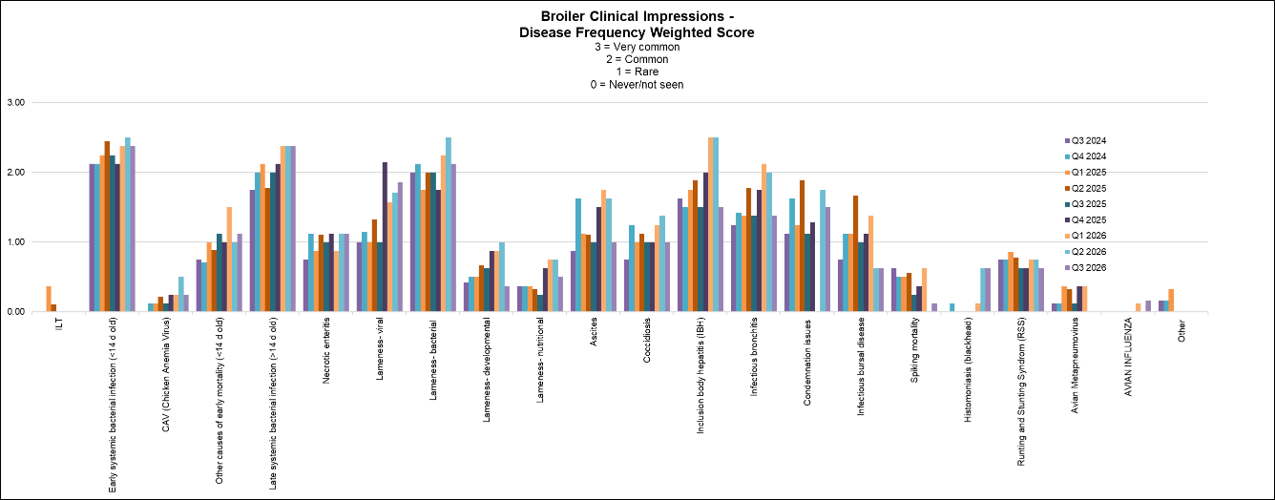
The graph below depicts the frequency of the conditions seen in the flocks. The most frequent 3 conditions seen this quarter were: early systemic bacterial infection (<14 d old), late systemic bacterial infection (>14 d old) and lameness (bacterial).
AHL
Similar number of cases (from previous quarter):
– Other causes of early mortality (< 14 days old) – Hepatitis/ hepatic necrosis/ cholangitis/ bile duct hyperplasia.
– Late systemic bacterial infection (> 14 days old) – E. coli and E. cecorum isolated either in pure culture or in combination. E. coli and E. cecorum also isolated together as well as with either S. aureus or Salmonella Enteritidis.
– Pododermatitis.
– Avian metapneumovirus (Type B, Turkey ONT 24-093127-0001).
– RSS – Suspect.
– Wooden Breast (Processing samples).
Increased number of cases (from previous quarter):
– Lameness nutritional (rickets).
– Lameness viral (Reovirus confirmed: ON_variant_H_18-008168, ON_variant_A_12-073195, ON_variant_B_12-070460, ON_variant_F_12-087411, ON_variant_E_12-090746, ON_variant_G_16-102019, ON_variant_G.2-25-112494, SK_R10, Alberta 17-0025 and Pennsylvania 9552.)(There are also 6 cases where more than 1 reovirus sequence is identified: ON_variant_H_18-008168 with either ON_variant_A_12-073195 or ON_variant_G.2-25-112494 or SK_R10. SK_R38_AHL 13-030320 and BC 17-0408.)
– Coccidiosis (small intestine or ceca).
– RSS – Confirmed.
– Botulism (Type C).
Decreased number of cases (from previous quarter):
– Early systemic bacterial infection (< 14 days old) – All cases of septicemia had E. coli isolated in pure culture or with either E. cecorum or P. aeruginosa.
– Lameness developmental (tibial dyschondroplasia).
– Lameness bacterial (Primarily diagnosed on histology) – E. coli isolated in combination with E. cecorum. Nine cases of osteomyelitis had E. coli isolated with E. cecorum or E. cecorum isolated in pure culture.
– Lameness viral (Reovirus suspicious, primarily diagnosed on histology).
– Inclusion body hepatitis (FAdVE, FAdVE/FAdVAC, FAdVE/FAdVD/FAdVAC, FAdV08b_AHL_16-049095_ON and FAdV08b_AHL_18-057921_ON)(There are also 6 cases with 2 sequences identified: FAdV08b_AHL_18-057921_ON with FAdV08b_AHL_16-049095_ON or FAdV11_USA_1047. FAdV08b_AHL_16-049095_ON with FAdV11_USA_1047. There is 1 case with 3 sequences identified: FAdV08b_AHL_18-057921_ON, FAdV08b_AHL_16-049095_ON and FAdV08a USA TR59.)
– Infectious bronchitis (IBV – pathology cases and PCR positive) (Field strains: CAL1737-04/AHL 12-025379. Vaccine strains: IBV_Conn, IBV_Mass-MA5 and USA GA08-IBron)(There are also 14 cases with 2 sequences identified: All 14 GA08-IBron with Mass-MA5, IBV_Conn vaccine, USA Mass-AHL 21-008165 vaccine or CAL1737-04/AHL 12-025379. There is 1 case with 3 sequences identified: Ont CU82792-AHL 19-033887, USA GA08-IBron vaccine and IBV_Conn vaccine)
– Infectious bursal disease (PCR positive field strains: USA PA105-2014, British Columbia 15-062782. Vaccine strains: USA W2512 – Blen Vaccine)(There is also 1 case with 2 sequences identified: USA W2512 – Blen Vaccine and USA PA105-2014 field strain).
No cases diagnosed this quarter:
– Necrotic enteritis.
– Spiking mortality.
– ILT.
– Dead on arrival (DOA).
Other diagnostic findings:
Anemia, ascites, pneumonia, lymphoplasmacytic and heterophilic airsacculitis, granulomatous airsacculitis and pneumonia, hepatitis, bile duct hyperplasia, sinusitis, dehydration, necrotizing and heterophilic bursitis, peripheral myelin sheath vacuolation and valgus deformity.
Salmonellosis (Salmonella isolation)
Figure 1
Animal Health Laboratory (AHL) Salmonella isolations in broilers from OHSFP (Ontario Hatchery and Supply Flock Program) environmental testing are summarized below by quarter periods Jan-Mar, Apr-Jun, Jul-Sep, Oct-Dec.
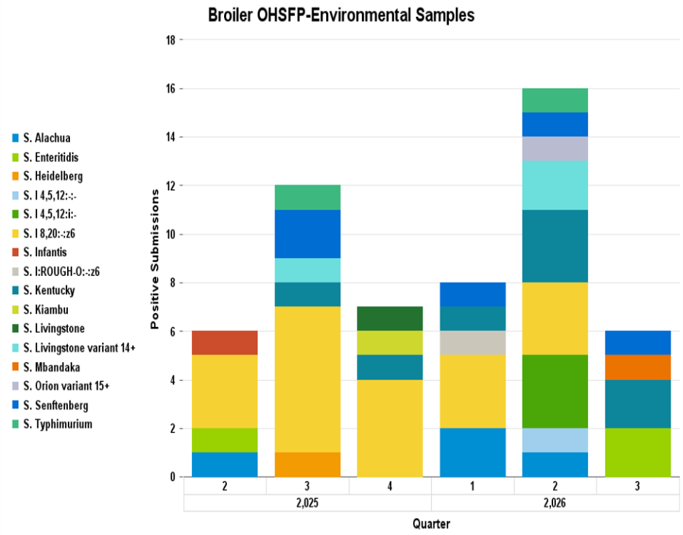
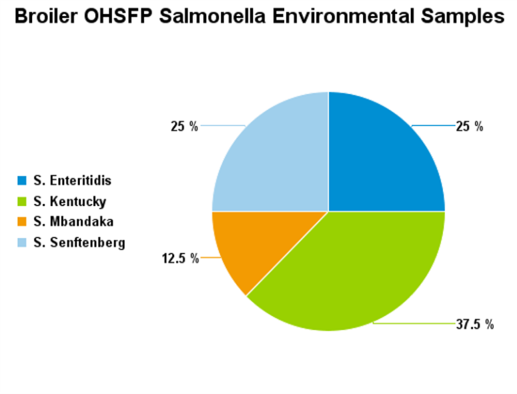
From June 1st to August 31st, 2026, AHL tested 47 OHSFP environmental submissions and 335 samples from broilers. There were 8 positive samples: S. Kentucky, S. Enteritidis and S. Senftenberg were most isolated.
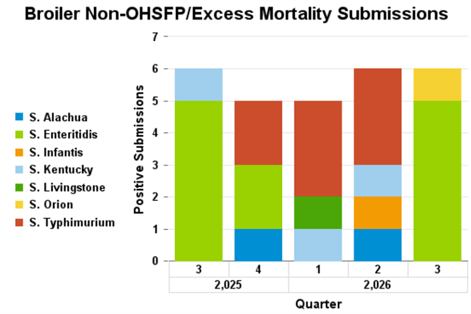
There were 8 positive submissions outside of OHSFP environmental testing in broilers between June 1st and August 31st, 2026, with 5 S. Enteritidis, 1 S. Typhimurium, 1 S. Orion, and 1 S. Alachua isolated.
Chickens slaughtered and carcass condemnation (May-July 2026)
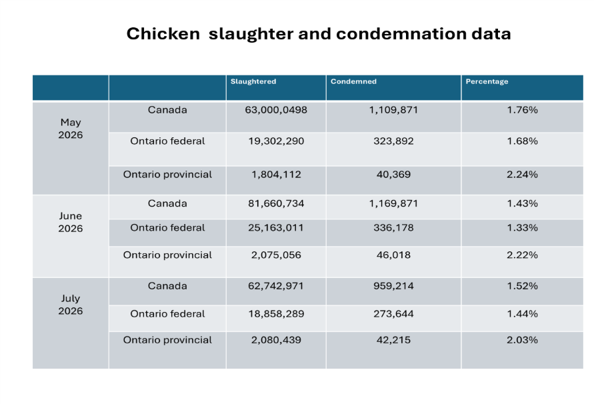
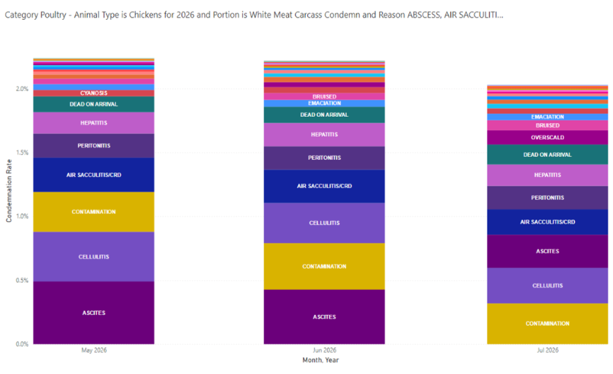
Provincial slaughter: an average condemnation of 2.16 % for the 3-month period and among that, a total of 1.04 % was attributed to: ascites (0.39 %), contamination (0.33 %) and cellulitis (0.32 %).
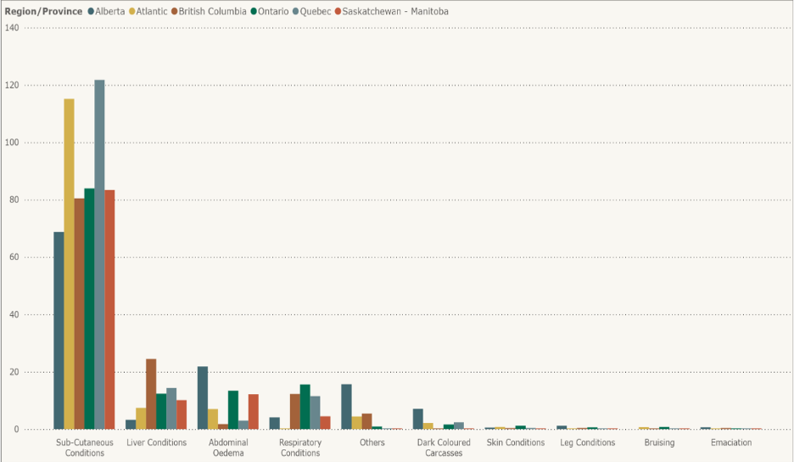
For Ontario province (green bar), the subcutaneous condition was significantly reduced compared with Atlantic and Quebec regions and overall, less condemnation rate compared with other provinces.
Broiler-Breeders
Practitioners
Most of the diseases were stable for this quarter but bacterial lameness continues to be an issue and most of the time this condition is a result of a combination of at least 2 bacteria (E. coli, Staphylococcus, G. anatis or E. cecorum).
Stable conditions: fowl cholera, early bacterial infections, other causes of early mortality (<14 days old), lameness developmental/nutritional/ viral/ bacterial, in-lay bacterial septicemia (E. coli, E. cecorum and Gallibacterium anatis), necrotic enteritis, coccidiosis, fowl pox, ILT, disease related hatchability issues (suspected to be related to white chick syndrome), multi-drug-resistant E. coli (> 3 drugs) and avian influenza.
Stable to increased conditions: histomoniasis, though diagnosed, was not always clinically relevant to the whole flock. Of note, one practitioner identified this disease as common. Also stable to increased was “other” (gangrenous dermatitis – E. coli & C. septicum).
Stable to decreased conditions: IBV – decreased production/abnormal eggs. Most practitioners reporting not seeing IBV related production challenges. Industry has been incorporating newly licensed GA-08 strain into vaccination program, which may be supporting this reduction. Mycoplasmosis with no reported cases this quarter.
Stable with equally increased or decreased conditions: AMPV with E. coli as main comorbidity.
Stable to slightly decreased conditions: pre-lay (<20 weeks) morbidity/mortality, aggression and cannibalism, IBV – sudden spike in mortality (Note similar impact may be from the vaccination comment for IBV associated production/abnormal eggs) and CAV.
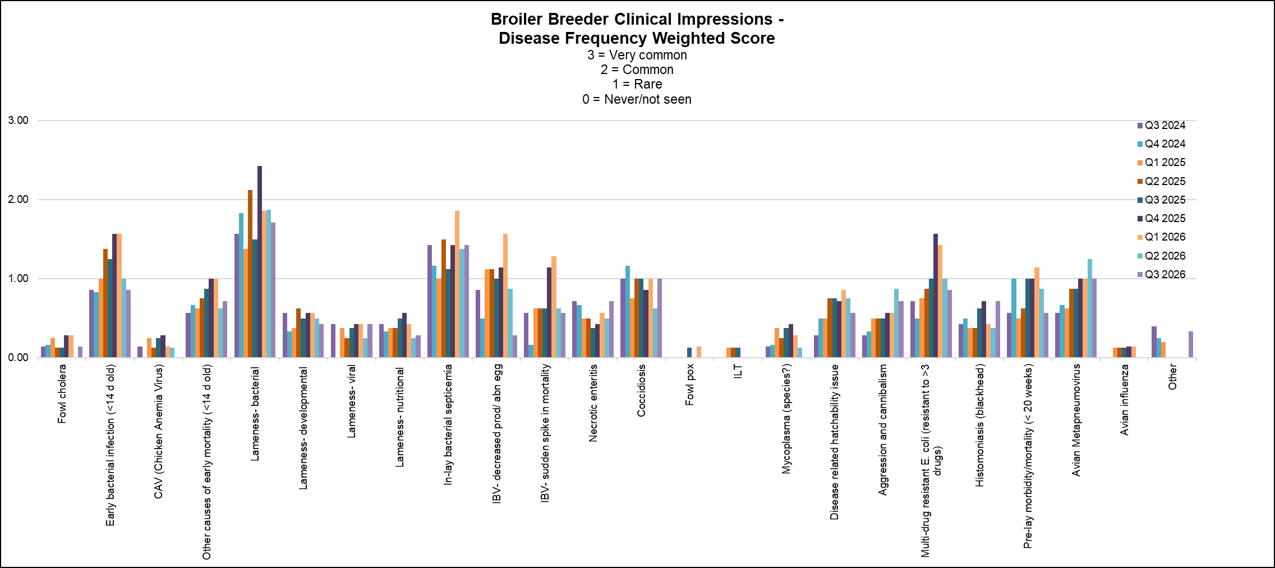
Below graph depicts the frequency of the conditions seen in the flocks. The most frequent conditions seen this quarter were: lameness (bacterial), in-lay bacterial septicemia and coccidiosis.
Fowl cholera (Pasteurella multocida) – Occasionally isolated from lameness cases from vaccinated flocks.
Similar number of cases (from previous quarter):
– Other causes of mortality (<14 days old) – Dehydration and bacterial hepatitis.
– IBV (decreased productivity/abnormal eggs/sudden spike in mortality) – (Field strain: CU82792-AHL 19-033887 and CU82792-AHL 07-21349. Vaccines: IBV_Mass-MA5 and USA GA08-IBron)(There is also 1 case with 3 sequences identified: IBV_Conn vaccine,
USA GA08-IBron vaccine and IBV_Mass-MA5 vaccine).
– White Chick Syndrome.
Increased number of cases (from previous quarter):
-Early bacterial infection (<14 days old) – Cases of septicemia had E. coli isolated in pure culture or with E. cecorum and S. aureus
– Pododermatitis – E. coli isolated with either E. cecorum or S. aureus. E. coli, E. cecorum and S. aureus isolated together. Avibacterium spp. isolated with E. coli and P. multocida.
– Coccidiosis – Identified in the small intestine (E. necatrix/E. maxima), ceca or both.
– Necrotic enteritis (C. perfringens isolated).
– Amyloidosis.
Decreased number of cases (from previous quarter):
– Prelay morbidity/mortality (<20 weeks) – S. aureus and E. coli are isolated in pure culture. Also, E. coli and E. cecorum are isolated together. One other diagnosis is a mixed CAV infection: Taiwan 2012-1207PT05 and CAV_ON_AHL14-051493-0003.
– Cellulitis/Dermatitis.
– Avian metapneumovirus (Type B, Turkey ONT 24-093127-0001).
– Lameness trauma – Tendon rupture, bone fracture.
– Lameness bacterial – S. aureus and E. coli are each isolated in pure culture as well as together. S. aureus is also isolated with E. cecorum or both E. coli and E. cecorum. E. coli and E. cecorum are isolated together and with P. multocida. P. multocida is also isolated with S. aureus and E. coli. S. aureus is also isolated with Avibacterium spp. There is also 1 case of bacterial osteomyelitis and 1 case of vertebral osteomyelitis.
– Intestinal parasitism – Histomonas and nematodiasis (Ascarids).
No cases diagnosed this quarter:
– Lameness nutritional (rickets).
– Lameness developmental.
– Fowl pox.
– Mycoplasmosis.
– Other causes of inlay mortality.
– Urate nephrosis/visceral urates/articular urates.
Other diagnostic findings:
Gangrenous dermatitis (S. aureus/ E. coli/ C. septicum, S. aureus/ E. coli/ E. cecorum and E. coli/ C. septicum), enteritis, femoral head necrosis, slipped tendon, liver hemorrhage and salpingitis (E. coli).
Salmonellosis (Salmonella isolation):
Figure 1
Animal Health Laboratory (AHL) Salmonella isolations in broiler-breeders from OHSFP environmental testing are summarized below by quarter periods Jan-Mar, Apr-Jun, Jul-Sep, Oct-Dec:
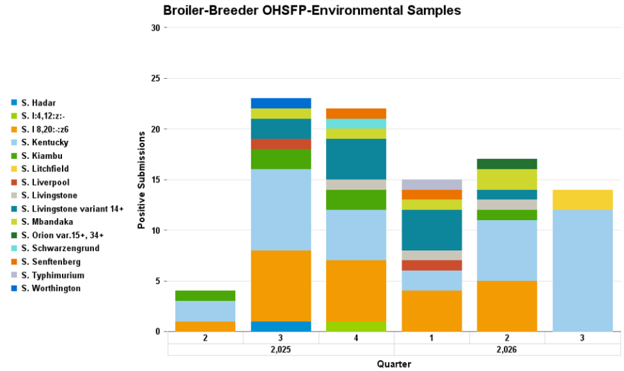
Figure 2
From June 1st to August 31st, 2026, AHL tested 196 OHSFP environmental submissions and 3,041 samples from broiler-breeders. There were 18 positive samples: S. Litchfield and S. Kentucky were most isolated.
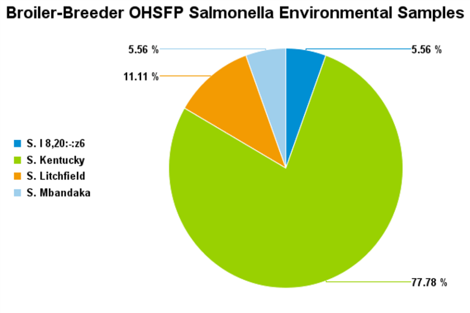
Figure 3
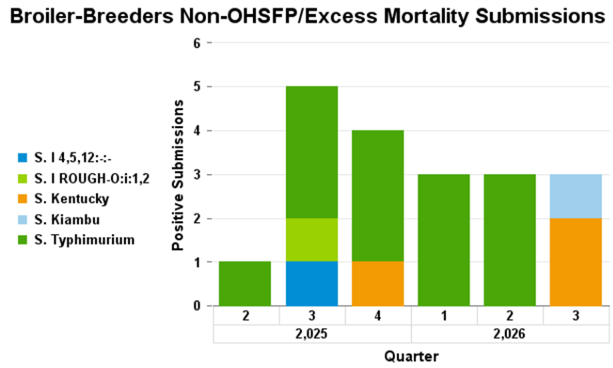
There were 4 positive submissions outside of OHSFP environmental testing in broiler-breeders between June 1st and August 31st, 2026; 2 were S. Kentucky, 1 was S. Typhimurium and 1 was S. Kiambu.
Layers
For the past several quarters AMPV and IBV seem to be linked as one disease leads or predispose to the other.
There was an increase in bacterial peritonitis and salpingitis which is also believed to be linked with AMPV infections. This condition is noticed early in lay, usually in the first 5 or 6 weeks of lay as birds are coming into production , lesions are related to E. coli infection except few cases of Gallibacterium anatis and a 1% of mortality is believed to be related to this condition. There were also several flocks that were not hitting the full peak production, and they were stalling out at 2-3 % lower than expected. Birds appeared to be healthy, and no etiology could be linked to this, other than characterised as an episodic frequency.
There was one case of botulism in a free-range flock.
Salmonella enteritidis vaccination program continues to be administrated in layer birds. Based on the veterinarian’s data, adverse effects are described as minor impact such as growth stalling for 3 days between 14 and 17 weeks of age and about 5% uniformity challenge.
Practitioners
Stable to increased conditions: bacterial peritonitis/salpingitis (E. coli) and AMPV.
Clinical signs seen with AMPV cases: E coli septicemia, IBV, aggression and cannibalism, false layer-oviduct impaction, drop in egg production, peritonitis and salpingitis.
Stable to slightly increased conditions: early systemic bacterial infection, IBV respiratory issues.
Stable to slightly decrease conditions: osteoporosis and focal duodenal necrosis.
Stable conditions: other causes of mortality (botulism case), ILT, mycoplasmosis, coccidiosis, necrotic enteritis, hysteria, aggression and cannibalism, multi drug resistant E. coli (resistant to > 3 drugs), histomoniasis, Salmonella enteritidis and avian influenza.
Stable with equally increased or decreased conditions: IBV- production drop and abnormal eggs.
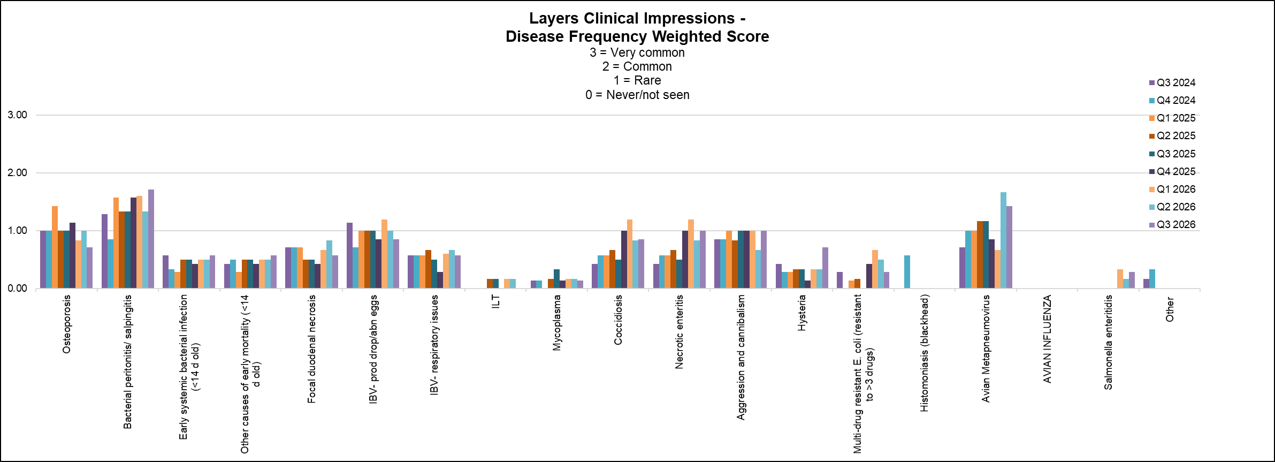
Below graph depicts the frequency of the conditions seen in the flocks. The most frequent conditions seen this quarter were: bacterial peritonitis/ salpingitis, aMPV, necrotic enteritis, aggression and cannibalism.
Similar number of cases (from previous quarter):
– In-lay mortality (>20 weeks old) – Septicemia (E. coli/ E. cecorum, E. coli, C. septicum/ C. perfringens/ E. coli), E. coli airsacculitis, gangrenous dermatitis (histology, C. septicum/ C. perfringens / S. aureus).
– Avian metapneumovirus (Type B) – Cranial osteomyelitis and otitis.
Increased number of cases (from previous quarter):
– Early mortality (<14 days old) – Starve outs, omphalitis.
– Early mortality (other) – Yolk sacculitis, peritonitis.
– Prelay mortality (<20 weeks old) – Septicemia, emaciation and dehydration.
– Necrotic enteritis (C. perfringens).
– Coccidiosis (Small intestine or ceca).
– Osteoporosis.
– Infectious bronchitis (IBV – production drop/ egg abnormalities/ respiratory) – Field strains: CU82791-AHL 07-21349, IBV_CA_1734_04_ON_12-025379 and IBV_DMV_ON_21-017385. Vaccine strains: IBV_Mass-MA5, USA GA08-IBron and USA DE-072). There was also 1 case with 2 sequences identified: USA GA08-IBron vaccine and IBV_Conn vaccine.
No cases diagnosed this quarter:
– Leg issues – Trauma, bone fracture.
– Leg issues – Bacterial (tenosynovitis/arthritis).
– Leg issues (other).
– Focal duodenal necrosis (FDN).
– Intestinal parasitism (other).
– Aggression/Hysteria.
– ILT.
– Mycoplasma.
– Elevated DOA.
Other diagnostic findings:
Salpingitis, salpingitis/ septicemia, salpingitis/ peritonitis, salpingitis/ oophoritis/ celomitis / E. coli, dehydration, vaccine reaction, lymphoplasmacytic neuritis, hemorrhage and anemia.
Salmonellosis (Salmonella isolation)
Figure 1
Animal Health Laboratory (AHL) Salmonella isolations in layers from OHSFP environmental testing are summarized below by quarter periods Jan-Mar, Apr-Jun, Jul-Sep, Oct-Dec.
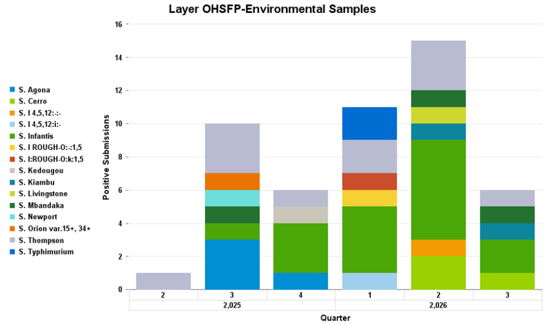
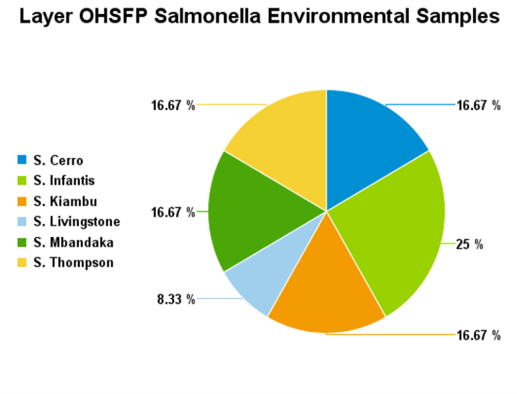
From June 1st to August 31st, 2026, AHL tested 289 OHSFP environmental submissions and 1,489 samples from layers. There were 12 positive samples with S. Infantis most isolated.
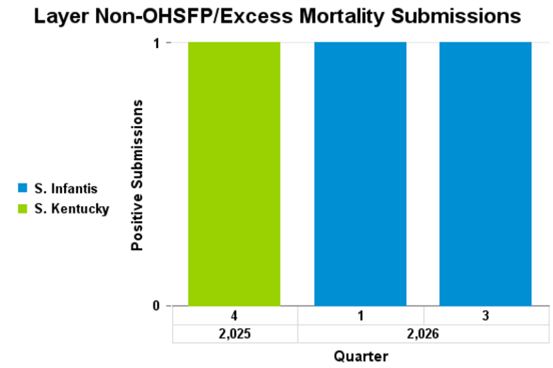
There were no positive submissions outside of OHSFP environmental testing in layers this quarter.
Turkeys
Practitioners
Conditions were described by practitioners as stable and consistent with last quarter with flocks that were not challenged with disease conditions and were performing very well while others struggling to navigate with several episodes of certain infections.
AMPV is a consistent challenge with some flocks with a change in clinical presentation, as AMPV seems to affect birds within 1-2 weeks prior processing and signs are more related to systemic respiratory than swollen head syndrome.
A couple of flocks detected with histomoniasis that led to 90 % devastating losses. This seems to be a real challenging condition even when strict biosecurity measures are in place.
One practitioner suspected few cases on ionophore toxicity with no feed trace back.
Stable conditions: erysipelosis , early systemic bacterial infection, other causes of mortality, ORT, necrotic enteritis, mycoplasmosis, enteritis, round heart, reovirus tenosynovitis, multi drug resistant E. coli (resistant to > 3 drugs), and avian influenza.
Stable to increased conditions: coccidiosis, late systemic bacterial infection (E. coli), and histomoniasis.
Stable to slightly increased conditions: fowl cholera and AMPV.
Clinical signs and pathology seen in flocks affected by AMPV infection:
- severe systemic bacterial infections mostly attributed to E. coli infection
- ORT related comorbidity, lameness
- increased feed conversion and condemnation, uneven size of the birds and cannibalism.
Stable to slightly decreased conditions: mycotic respiratory disease, other respiratory diseases, aggression, and cannibalism.
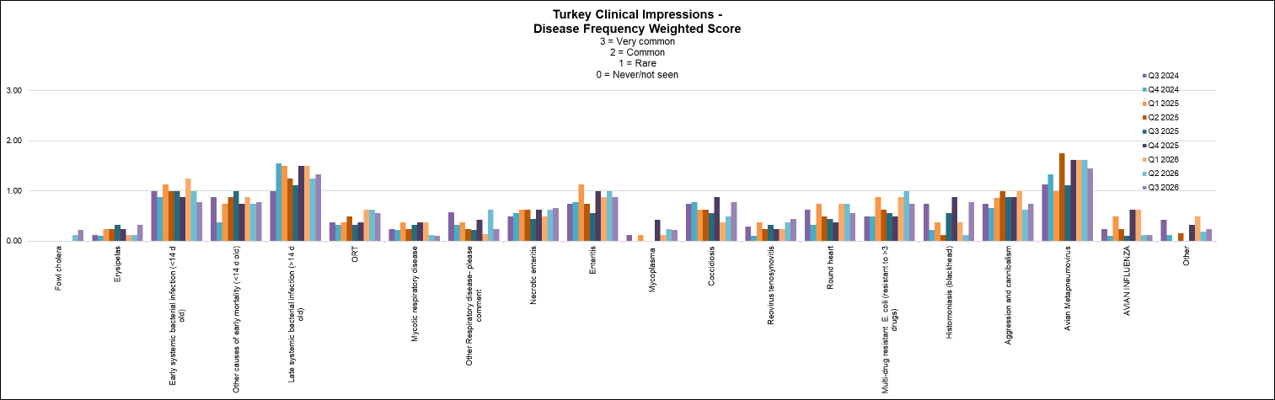
The graph on the following page depicts the frequency of the conditions seen in the flocks. The most frequent 3 conditions seen this quarter were: aMPV, late systemic bacterial infection (>14 d old) and enteritis.
Similar number of cases (from previous quarter):
– Reovirus – Histology.
Increased number of cases (from previous quarter):
– Early systemic bacterial infection (<14 days old) – Yolk sacculitis – E. coli and P. aeruginosa isolated together.
– Late systemic bacterial infection (>14 d old) – E. coli isolated in pure culture.
– ORT (Ornithobacterium rhinotracheale).
– Bacterial pneumonia – E. coli (2 airsacculitis) and fibrinous pneumonia.
– Enteric disease – Heterophilic enteritis.
– Coccidiosis/ Parasitism – Small intestine.
– Necrotic enteritis.
– Histomoniasis.
– Tibial dyschondroplasia.
Decreased number of cases (from previous quarter):
– Avian metapneumovirus – Type B.
No cases diagnosed this quarter:
– Fowl cholera (Pasteurella multocida).
– Erysipelas.
– Other causes of early mortality (<14 days old, starve out / dehydration).
– Mycotic respiratory disease.
– Salmonellosis.
– Rickets.
– Condemnations.
– DOA.
– Mycoplasma.
Other diagnostic findings:
Bacterial osteomyelitis, tenosynovitis (1 P. multocida – history of sheep on same property), cloacal inflammation, granulomatous myocarditis, hepatic degeneration and necrosis and ionophore toxicosis.
Salmonellosis (Salmonella isolation)
Figure 1
Animal Health Laboratory (AHL) Salmonella isolations in Turkeys from OHSFP environmental testing are summarized below by quarter periods Jan-Mar, Apr-Jun, Jul-Sep, Oct-Dec:
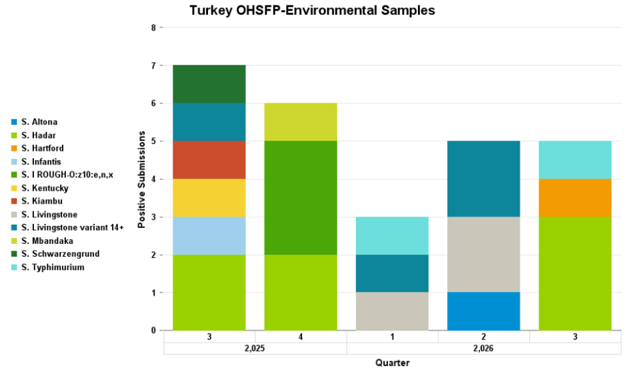
From June 1st to August 31st, 2026, AHL tested 356 OHSFP environmental submissions and 1,793 samples from turkeys. There were 5 positive samples with S. Hadar most isolated.
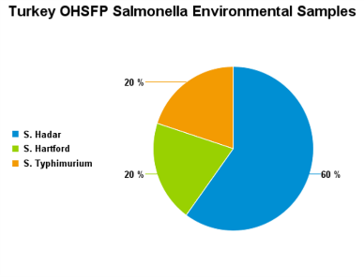
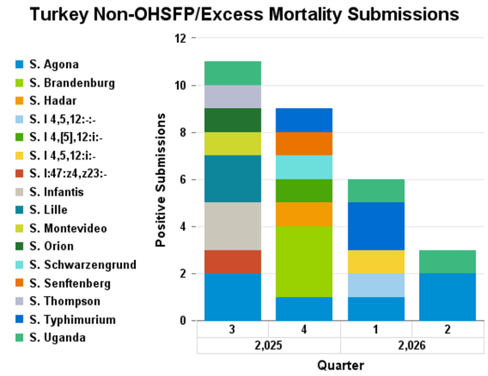
There were no positive isolates outside of OHSFP environmental testing (Ontario Hatchery and Supply Flock Program) in turkeys between June 1st and August 31st, 2026.
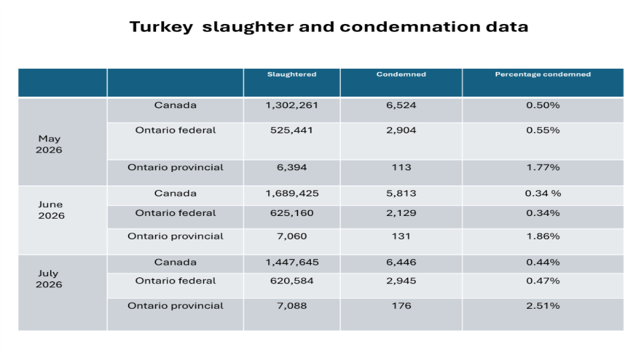
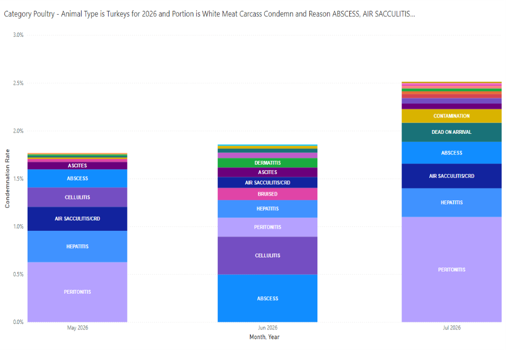
Provincial slaughter– a 2.04 % average of condemnation rate for 3 months period and among that, more than half of condemnations (1.22%) were attributed to: peritonitis (0.64%), abscesses (0.31%) and hepatitis (0.27%).
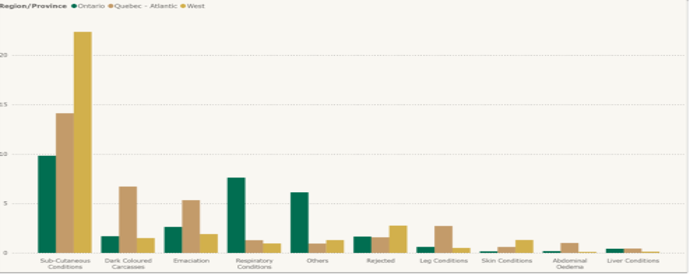
Ontario province condemnations over 5-year period: stable subcutaneous conditions but gradually increased in respiratory conditions for the past 2 years
Top 3 conditions listed for this quarter were: subcutaneous, respiratory and others.
Small Flock
Chickens:
AHL: Diagnoses at AHL included mites, coccidiosis, Marek’s disease, neoplasia (testicular neoplasia, adenocarcinoma), salpingitis (oophoritis/ coelomitis, impacted oviduct with celomitis), Mycoplasma gallisepticum, infectious bronchitis, other diagnoses (emaciation, dehydration, crop impaction, sinusitis/tracheitis (Avibacterium spp./ G. anatis), internal laying, mucosal ulceration (proventriculus/ gizzard), atherosclerosis/vasculitis, chronic hepatopathy with amyloidosis).
Gamebird:
AHL: 1 peafowl case submitted this quarter.
1) Chronic bronchitis, cloacitis, coccidia, salpingitis, renal tubular mineralization/ necrosis/ nephritis.
Waterfowl:
AHL: 4 duck cases submitted this quarter, 2 positive IBV PCRs
1) Pekin – conjunctivitis and keratitis.
2) Duck – fibrin/amyloid in spleen, interstitial hemorrhage and skeletal muscle necrosis (legs).
3) Pekin – conjunctivitis.
4) Muscovy – urate nephrosis, visceral and articular urate deposits, chronic renal interstitial fibrosis.
Turkey:
AHL: No cases submitted this quarter.
Pigeon:
AHL: 4 cases submitted this quarter.
1) Bacterial septicemia.
2) Polyserositis.
3) Conjunctivitis suspicious for Chlamydia.
4) Thyroid hyperplasia.
Practitioners:
Information provided with the clinical impression in chickens:
Frequency of conditions seen in practice:
Common: ectoparasitism, intestinal parasitism, Marek’s disease, trauma, pododermatitis, peritonitis/salpingitis, ascites and Mycoplasma.
Rare: other neoplasia, GI impaction, vent trauma, ILT and other.
Not seen: bacterial septicemia, pneumonia/airsacculitis, FLHS, urate nephrosis/ visceral urates/articular urate deposits, Histomoniasis, erysipelas, toxin, and aMPV.
Changes since last quarter: stable conditions: ectoparasitism, intestinal parasitism, vent trauma, bacterial septicemia, pneumonia/airsacculitis, FLHS, urate nephrosis/ visceral urates/articular urate deposits, ILT, Histomoniasis, erysipelas, toxin, Mycoplasma, and AMPV; increased cases of pododermatitis, peritonitis/salpingitis, ascites; decreased cases of Marek’s disease, other neoplasia, GI impaction, trauma and other.
Poultry research from Ontario and beyond
Thank You! We thank the following poultry veterinarians who completed the veterinary survey:
Dr. Tim Abolarin, Dr. Elizabeth Black, Dr. Daniella Di Pirro, Dr. Fernando Salgado-Bierman, Dr. Shahbaz Haq, Dr. Elana Huong, Dr. Anastasia Novy, Dr. Mike Petrik, Dr. Joanne Rafuse, Dr. Ben Schlegel, Dr. Hillary Schramm, Dr. Chanelle Taylor, Dr. Brenna Tuer, Dr. Alex Weisz, and Dr. Jessalyn Walkey. Small Flock: Dr. Amari Patel.