
Ontario Animal Health Network (OAHN) Poultry Expert Network Quarterly Producer Report
Reovirus, Infectious Bronchitis Virus (IBV), Infectious Bursal Disease Virus (IBDV), Avian Metapneumovirus (AMPV), and Fowl Adenovirus (FAdV, IBH) strains in Ontario from January 1st, 2023, to December 31st, 2025.
Information provided by Dr. Tanya Rossi, Animal Health Laboratory
The following tables show IBV, IBDV, AMPV, and FAdV sequencing data from Ontario commercial poultry tested by the Animal Health Laboratory’s Virology lab from 2023-2025. Numbers represent the number of positive samples detected for each strain. The three most common field strains for each year are in bold.
| Reovirus | 2023 | 2024 | 2025 |
| AB_17-0025 | 0 | 0 | 2 |
| BC_17-0408-2017 | 0 | 7 | 1 |
| China_BZHM_150814 | 0 | 0 | 2 |
| Georgia_13-97066 | 0 | 2 | 1 |
| ON_classic-10-077184 | 1 | 1 | 0 |
| ON_variantA-12-073195 | 9 | 7 | 8 |
| ON_variantB-12-070460 | 0 | 1 | 0 |
| ON_variantE-12-090746 | 0 | 0 | 1 |
| ON_variantF-12-087411 | 0 | 0 | 9 |
| ON_variantG-16-102019 | 0 | 0 | 3 |
| ON_variantH-18-008168 | 4 | 6 | 56 |
| ON_variantI-18-087934 | 1 | 0 | 0 |
| Pennsylvania_01769-14 | 0 | 1 | 1 |
| Pennsylvania_13-09552 | 0 | 1 | 2 |
| Pennsylvania_13-095523 | 7 | 2 | 0 |
| Pennsylvania_13-22342 | 6 | 1 | 0 |
| Pennsylvania_6-03200-2012 | 0 | 1 | 0 |
| SK_R12 | 8 | 11 | 4 |
| SK_R29 | 1 | 0 | 0 |
| SK_R38-AHL13-030320 | 1 | 0 | 0 |
| SK_SK-R10 | 0 | 0 | 4 |
| USA_s1133 | 1 | 0 | 0 |
| Grand Total | 39 | 41 | 94 |
| IBV | 2023 | 2024 | 2025 |
| ON_CAL1737-04-AHL12-025379 | 5 | 5 | 4 |
| ON_CU82792-AHL07-21349 | 6 | 0 | 2 |
| DMV_ON_AHL15-077145 | 7 | 7 | 30 |
| DMV_ON_AHL21-017385 | 48 | 19 | 34 |
| USA_CAL1737-04 | 1 | 0 | 0 |
| USA_Conn vaccine | 21 | 22 | 74 |
| USA_CU82792 | 2 | 1 | 0 |
| USA_DMV-1639-11 | 0 | 1 | 0 |
| USA_GA08 | 0 | 1 | 1 |
| USA_GA08-Ibron vaccine | 0 | 0 | 6 |
| USA_GA98 | 0 | 1 | 0 |
| USA_Mass-AHL21-008165 vaccine | 3 | 9 | 65 |
| USA_Mass-H120 | 7 | 0 | 0 |
| USA_Mass-MA5 vaccine | 27 | 38 | 37 |
| USA_PA-5344-98 | 0 | 0 | 1 |
| Grand Total | 127 | 104 | 254 |
| IBDV | 2023 | 2024 | 2025 |
| BC 15-062782 field strain | 2 | 6 | 22 |
| ON 05-SA08-03-25355 field strain | 3 | 0 | 1 |
| ON NC171-06-48866 field strain | 0 | 1 | 0 |
| SP Gumbohatch vaccine | 1 | 0 | 0 |
| UK Faragher52-70 vaccine | 9 | 8 | 10 |
| USA 66-Indiana-2014 field strain | 9 | 5 | 1 |
| USA D78 vaccine | 2 | 2 | 1 |
| USA Del-A-SVS510 Vaccine | 3 | 0 | 0 |
| USA Del-E | 12 | 6 | 14 |
| USA Edgar | 0 | 0 | 1 |
| USA GA-1 field strain | 1 | 0 | 1 |
| USA Lukert vaccine | 0 | 1 | 0 |
| USA OH-Sel1-2012 field strain | 0 | 3 | 1 |
| USA PA105-2014 field strain | 50 | 19 | 33 |
| USA W2512-Blen vaccine | 9 | 4 | 15 |
| Grand Total | 101 | 55 | 100 |
| AMPV | 2025 |
| Type A Iowa Turkey SEP-DK1-2024 | 1 |
| Type A Italy Turkey 259-01-03 | 1 |
| Type B ON Turkey 24-093127-0001 | 6 |
| Grand Total | 8 |
| Fowl Adenovirus* | 2023 | 2024 | 2025 |
| FAdVABC | 67 | 10 | 9 |
| FAdVD | 64 | 45 | 37 |
| FAdVD/FAdVE | 132 | 149 | 161 |
| FAdVE | 265 | 303 | 254 |
| FADV01_USA_CELO | 1 | 1 | 1 |
| FAdV08a_USA_Stanford | 2 | 0 | 0 |
| FAdV08b_AHL16-049095_ON | 40 | 87 | 56 |
| FAdV08b_AHL18-057921_ON | 39 | 44 | 33 |
| FAdV11_USA_1047 | 14 | 8 | 12 |
| Grand Total | 624 | 647 | 563 |
*For FAdV detection AHL uses a triplex real-time PCR assay that detects all FAdV species including: a FAdVD PCR, a FAdVE PCR, and a cross-reactive pan-FAdV test (FAdV A–E). Therefore, results should be interpreted as:
1) If FAdV D is positive, the sample contains an FAdV species D strain
2) If FAdV E is positive, the sample contains an FAdV species E strain
3) If both FAdV D and E are positive, this indicates a mixed infection
4) If FAdV D and E are negative but FAdV A–E is positive, then a different FAdV species is detected.
Poultry Veterinarian Survey Highlights – Q1 2026 (Dec 2025 – Feb 2026)
Broilers
This quarter saw an increase in seen conditions compared with the previous two quarters.
Practitioners
Increased conditions: early and late systemic bacterial infections attributed to E. coli and E. cecorum, inclusion body hepatitis (IBH), other causes of early mortality (IBH).
Stable to increased conditions: lameness of viral origin, lameness of bacterial origin (E. cecorum).
Stable to slightly increased conditions: ascites, infectious bronchitis (IBV), lameness developmental (increase detections of tibial dyschondroplasia at gross postmortem), infectious bursal disease (IBVD) and avian metapneumovirus infection (aMPV).
Stable conditions: ILT, chicken anemia virus (CAV), lameness of nutritional causes, runting stunting syndrome (RSS), histomoniasis, spiking mortality, and avian influenza.
Stable to decreased conditions: coccidiosis (E. tenella), necrotic enteritis.
Comorbidities described with aMPV infections were bacterial infections (E. coli most common), increased number of birds left behind and excessive condemnation rate at slaughter due to respiratory conditions.
A range between 5-29 % of E. coli isolates were described by practitioners to be resistant to trimethoprim sulpha (TMS) in broilers.
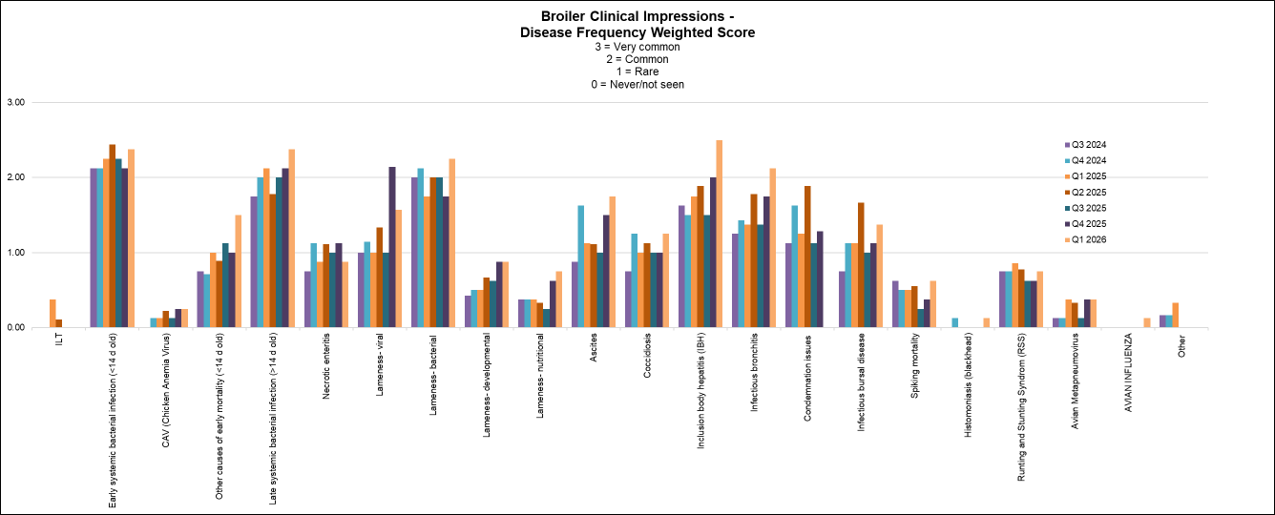
The graph on the next page depicts the frequency of the conditions seen in the flocks. The most frequent conditions seen this quarter were: early systemic bacterial infection (<14 d old, late systemic bacterial infection (>14 d old) lameness bacterial, and inclusion body hepatitis.
AHL
Similar number of cases (from previous quarter):
- Lameness nutritional (rickets).
- Lameness developmental (tibial dyschondroplasia).
- Necrotic enteritis.
Increased number of cases (from previous quarter):
- Early systemic bacterial infection (< 14 days old) – All cases of septicemia had E. coli isolated in pure culture, with E. cecorum or with P. aeruginosa.
- Coccidiosis (small intestine, ceca or both small intestine and ceca).
- Inclusion body hepatitis (FAdVE, FAdVE/FAdVAC, FAdVE/FAdVD/FAdVAC, FAdV08b_AHL_16-049095_ON and FAdV08b_AHL_18-057921_ON and FAdV11_USA_1047).
- Infectious bronchitis (IBV – pathology cases and PCR positive) (Field strains: IBV_DMV_ON_21-017385. Vaccine strains: IBV_Conn, IBV_Mass-MA5, USA Mass-AHL 21-008165 and USA GA08-IBron).
- Avian metapneumovirus (Type B, ONT 24-093127-0001).
- RSS – Confirmed.
- RSS – Suspect.
Decreased number of cases (from previous quarter):
- Other causes of early mortality (< 14 days old) – Attaching effacing bacteria ceca (E. coli) and enteritis.
- Late systemic bacterial infection (> 14 days old) – E. coli isolated in pure culture, with E. cecorum or with E. cecorum and P. aeruginosa.
- Lameness bacterial (Primarily diagnosed on histology) – E. coli or E. cecorum isolated either in pure culture or in combination. E. coli and E. cecorum isolated with S. aureus or S. Livingstone. Nine cases of osteomyelitis had E. coli isolated in pure culture, with E. cecorum or with E. cecorum and S. Livingstone.
- Lameness viral (Reovirus confirmed: ON_variant_H_18-008168, ON_variant_A_12-073195, ON_variant_G_16-102019, SK-R10, SK-R26 and Alberta 17-0025).
Infectious bursal disease (PCR positive field strains: USA PA105-2014, British Columbia 15-062782, and USA Del-E. Vaccine strains: UK Faragher52-70 and USA W2512-Blen).
No cases diagnosed this quarter:
- Lameness viral (Reovirus suspicious, primarily diagnosed on histology).
- Spiking mortality.
- Botulism.
- ILT.
- Dead on arrival (DOA).
Other diagnostic findings:
Proventricular glandular dilation, ventriculitis, testicular cystic dilation, thymic lymphoid depletion, hydropericardium, myopathy and M. synoviae.
Salmonellosis (Salmonella isolation)
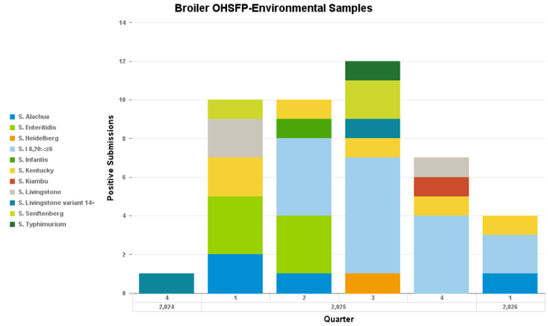
Animal Health Laboratory (AHL) Salmonella Isolations in broilers from OHSFP (Ontario Hatchery and Supply Flock Program) environmental testing are summarized by quarter periods Jan-Mar, Apr-Jun, Jul-Sep, Oct-Dec of 2025 and Jan-Feb 2026 (Figure 1).
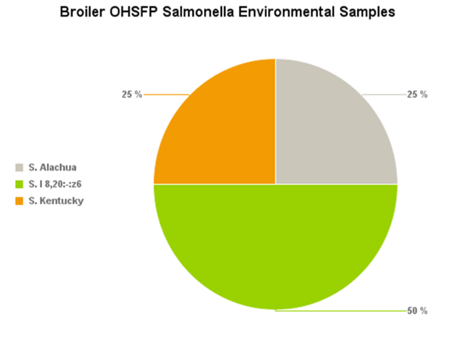
From December 1st, 2025, to February 28th, 2026, AHL tested 33 OHSFP environmental submissions and 255 samples from broilers. There were 4 positive isolated samples: S. I 8:20: -: Z6, S. Alachua and S. Kentucky (Figure 2).
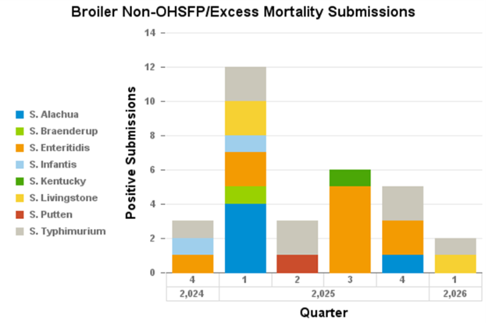
There were 2 positive submissions outside of OHSFP environmental testing in broilers between December 1st, 2025, and February 28th, 2026, with 1 S. Typhimurium and 1 S. Livingstone isolated (Figure 3).
Slaughter data
Chickens slaughtered and carcass condemnation (December 2025- February 2026) 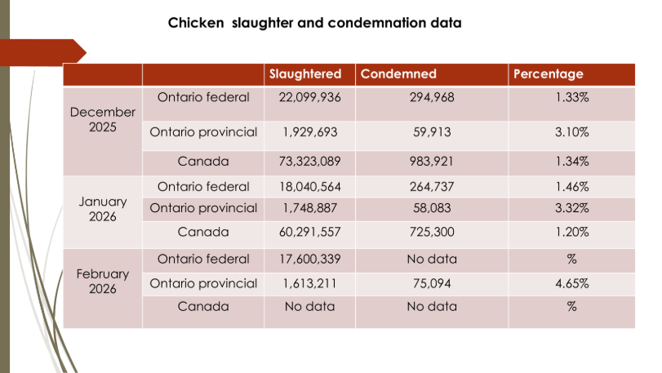
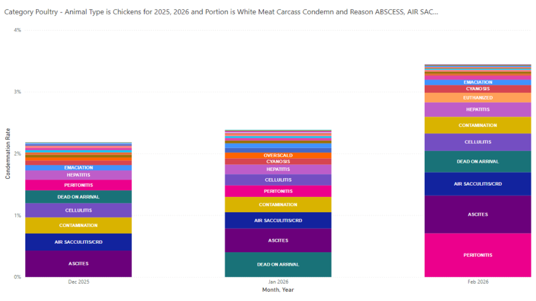
Condemnation conditions
Provincial slaughter: top 3 conditions of condemnation- ascites, peritonitis and air sacculitis/CRD.
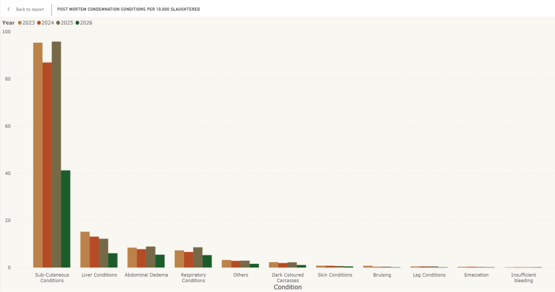
Federal slaughter (CAHSS data):top 3 conditions- subcutaneous, liver, abdominal oedema
Broiler-Breeders
Most of the conditions were reported to be stable or slightly increased in detections for this quarter. Lameness cases this quarter were described by some practitioners to be associated with the winter month contributor factors (higher snowfall and continuous cold days).
In-lay bacterial septicemia and bacterial lameness were attributed to E. coli and S. aureus.
Stable conditions: CAV, other causes of early mortality (<14 days old), lameness developmental/nutritional/ viral, in-lay bacterial septicemia mostly seen after the peak (E. coli), fowl pox, ILT, pre-lay morbidity/mortality (<20 weeks) and avian influenza.
Stable to slightly increased conditions: disease related hatchability issues, fowl cholera (isolated bacteria from the joints of vaccinated birds), multi-drug-resistant E. coli (> 3 drugs), aMPV and lameness bacterial.
Stable with equally increased or decreased conditions: IBV – decreased production/abnormal eggs ( aMPV was suspected to be the main contributor).
Stable to slightly decreased conditions: early bacterial infections, other causes of early mortality, IBV – sudden spike in mortality, coccidiosis, necrotic enteritis, mycoplasmosis, histomoniasis, aggression and cannibalism.
Clinical signs of the aMPV infection in affected flocks were described by the practitioners as torticollis, star gazing, depression, and occasional loss of sight associated with uveitis. Additionally, bacterial infection (osteomyelitis, otitis, arthritis), IBV, drop in egg production, and an increase in cull rates were mentioned by practitioners for this quarter.
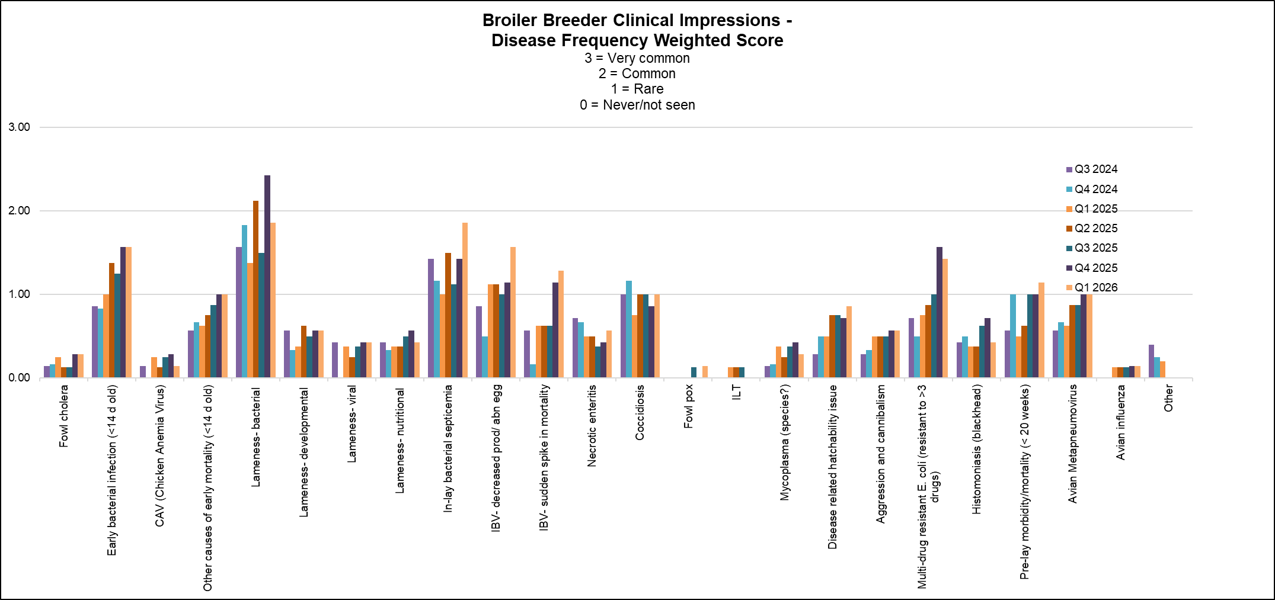
Below graph depicts the frequency of the conditions seen in the flocks. The most frequent conditions seen this quarter were: lameness (bacterial), early bacterial infection (<14 d old), IBV- decreased prod/ abn egg, In-lay bacterial septicemia.
AHL
Fowl cholera (Pasteurella multocida) – Occasionally isolated from lameness cases from vaccinated flocks.
Similar number of cases (from previous quarter):
- Other causes of mortality (> 14 days old) – Dehydration.
- Cellulitis/Dermatitis.
Increased number of cases (from previous quarter):
- Bacterial pneumonia – E. coli and E. cecorum were isolated together as well as with either S. aureus or G. anatis
- Intestinal parasitism – Histomonas and nematodiasis (Ascarids, Heterakis).
- IBV (decreased productivity/abnormal eggs/sudden spike in mortality) – (Field strain: IBV_DMV_ON_21-017385. Vaccines: IBV_Conn, IBV_Mass-MA5 and USA GA08-IBron).
- White Chick Syndrome.
- Urate nephrosis/visceral urates/articular urates.
Decreased number of cases (from previous quarter):
- Early bacterial infection (<14 days old) – Cases of septicemia had E. coli isolated in pure culture or in combination with E. cecorum, S. aureus or E. faecalis.
- Prelay morbidity/mortality (<20 weeks) – S. aureus was isolated in pure culture or with E. coli. E. coli and E. cecorum were isolated together. Other diagnoses included bursal and thymic atrophy, ascites/congestive heart failure and very mild encephalitis.
- Inlay bacterial septicemia – E. coli and S. aureus were each isolated in pure culture. E. coli was also isolated with either S. aureus or E. cecorum. S. aureus was isolated with E. cecorum. Other combinations included E. coli and E. cecorum with Avibacterium spp. or C. perfringens, C. novyi, S. aureus and E. coli.
- Avian metapneumovirus (Type B). Concurrent infections included bacterial pneumonia and septicemia.
- Lameness trauma – Subcutaneous hemorrhage.
- Pododermatitis – S. aureus was isolated with Avibacterium spp.
- Lameness bacterial – S. aureus was isolated in pure culture as well as with P. multocida and either E. coli, E. cecorum or both. In 1 case all 4 of these bacteria were isolated together. Cases of osteomyelitis had S. aureus isolated in pure culture as well as with E. coli, or both E. coli and E. cecorum. A case of vertebral osteomyelitis isolated a combination of S. aureus, E. coli and E. cecorum.
- Coccidiosis – Identified in the ceca (E. tenella).
- Amyloidosis.
No cases diagnosed this quarter:
- Lameness nutritional (rickets).
- Lameness developmental.
- Lameness viral – Reovirus.
- Necrotic enteritis.
- Fowl pox.
- Mycoplasmosis.
- Other causes of inlay mortality.
Other diagnostic findings:
Gangrenous dermatitis (C. septicum / Clostridium spp., S, aureus), lymphoid neoplasia, adenocarcinoma/carcinomatosis and salpingitis.
Salmonellosis (Salmonella isolation):
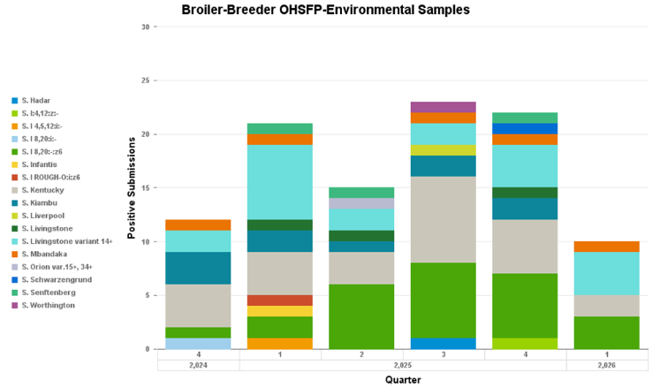
Animal Health Laboratory (AHL) Salmonella Isolations in broiler-breeders from OHSFP environmental testing are summarized by quarter periods Jan-Mar, Apr-Jun, Jul-Sep, Oct-Dec of 2025 and Jan-Feb of 2026 (Figure 1).
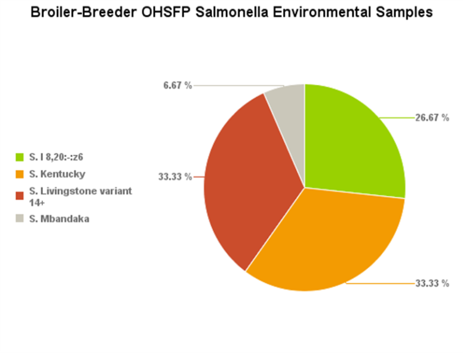
From December 1st, 2025, to February 28th, 2026, AHL tested 143 OHSFP environmental submissions and 2155 samples from broiler-breeders. There were 15 positive samples: S. I 8:20:-: Z6, S. Livingstone Var 14+ and S. Kentucky were most isolated (Figure2).
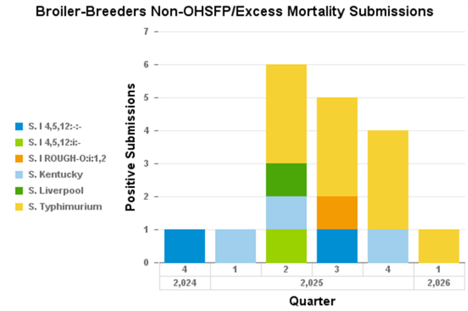
There were 4 positive submissions outside of OHSFP environmental testing in broiler-breeders between December 1st, 2025, to February 28th, 2026; all were S. Typhimurium (Figure 3).
Layers
Veterinarians continue to report changes in the health status on the flocks since September 2025, with increasing cases of peritonitis/salpingitis, increased mortality, and necrotic enteritis. aMPV ELISA positive testing was found in about 70% of the samples submitted.
Practitioners
Increased conditions: bacterial peritonitis/salpingitis early in the lay period (E. coli) and often associated with coccidiosis/NE.
Stable to increased conditions: coccidiosis (E. tenella), necrotic enteritis (primally detected in the duodenum segment), and aMPV. IBV production drop/abnormal eggs and IBV respiratory issues were seen often in conjunction with aMPV detected cases. Clinical signs seen with aMPV cases: anorexia, production stall or drop, increased mortality in brown breeds and egg production issues with white breeds, salpingitis, septicemia, infectious bronchitis, cannibalism and hysteria
Stable to slightly increased conditions: osteoporosis, early systemic bacterial infection, aggression, and cannibalism.
Stable conditions: other causes of mortality, focal duodenal necrosis, ILT, mycoplasmosis, hysteria, multi drug resistant E. coli (resistant to > 3 drugs), histomoniasis, avian influenza and Salmonella enteritidis detections.
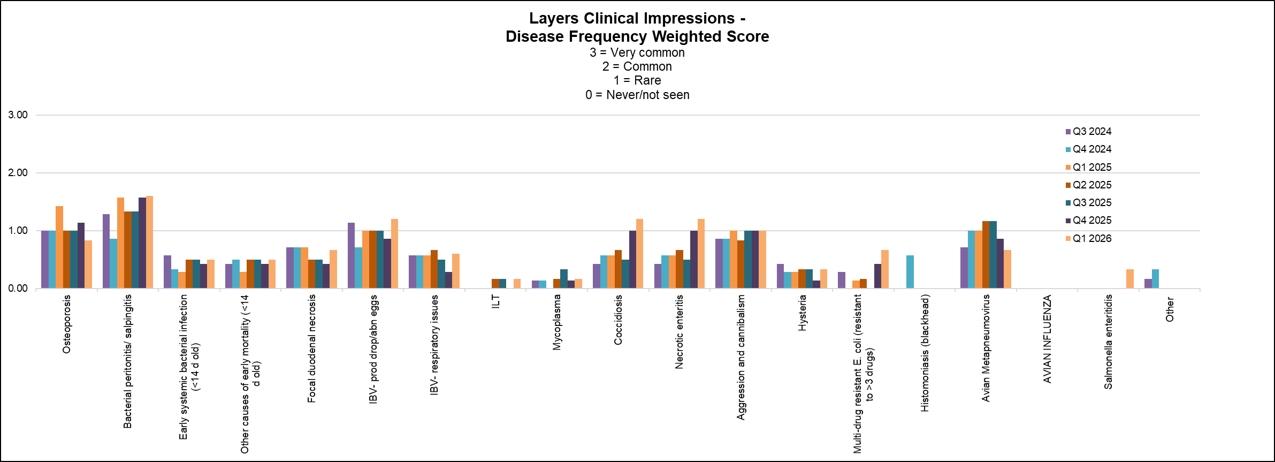
Graph on the next page depicts the frequency of the conditions seen in the flocks. The most frequent conditions seen this quarter were: bacterial peritonitis/ salpingitis, coccidiosis, necrotic enteritis, IBV- production drop/abnormal eggs.
AHL
Similar number of cases (from previous quarter):
- Early mortality (other) – Yolk sacculitis (E. coli) and dehydration.
- Coccidiosis (Small intestine).
- Infectious bronchitis (IBV – production drop/egg abnormalities/ respiratory) – Field strains: IBV_DMV_ON_21-017385 and UK 4-91. Vaccine strains: IBV_Conn, IBV_Mass-MA5 and USA Mass-AHL 21-008165.
Increased number of cases (from previous quarter):
- In-lay mortality (>20 weeks old) – Septicemia (E. coli, E. cecorum, S. aureus).
- Leg issues – Bacterial (tenosynovitis).
Decreased number of cases (from previous quarter):
- Prelay mortality (<20 weeks old) – Septicemia.
No cases diagnosed this quarter:
- – Early mortality (<14 days old, starve outs).
- Early mortality (<14 days old, omphalitis).
- Osteoporosis.
- Leg issues – Trauma, bone fracture.
- Leg issues (other).
- Focal duodenal necrosis (FDN).
- Necrotic enteritis (C. perfringens).
- Intestinal parasitism (other).
- Avian metapneumovirus.
- Aggression/Hysteria.
- ILT.
- Mycoplasma.
- Elevated DOA.
Other diagnostic findings:
Salpingitis (E. coli, G.anatis), osteomalacia, peritonitis / oophoritis, hepatic amyloidosis, urate nephropathy, visceral urate deposits, pneumonia and vaginal prolapse.
Salmonellosis (Salmonella isolation)
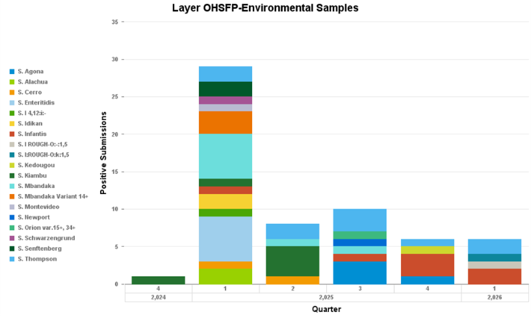
Animal Health Laboratory (AHL) Salmonella isolations in layers from OHSFP environmental testing are summarized by quarter periods Jan-Mar, Apr-Jun, Jul-Sep, Oct-Dec of 2025 and Jan-Feb of 2026 (Figure 1).
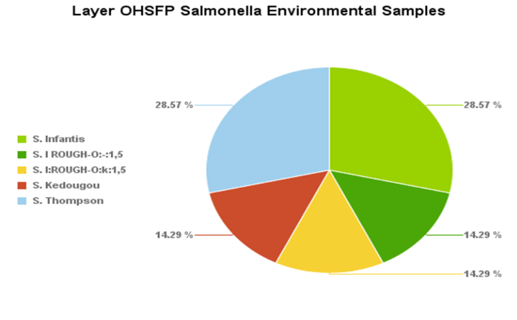
From December 1st, 2025, to February 28th, 2026, AHL tested 161 OHSFP environmental submissions and 1336 samples from layers. There were 7 positive samples with S. Thompson, and S. Infantis most isolated (Figure 2).
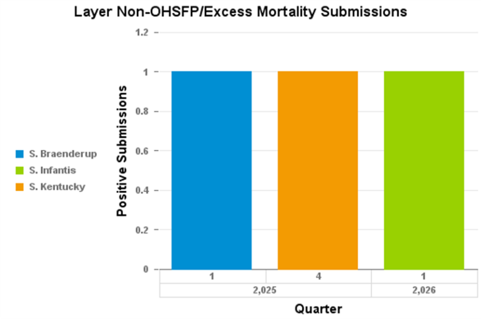
There was 1 positive submission outside of OHSFP environmental testing in layers this quarter. The species identified was S. Infantis (Figure 3).
Turkeys
Practitioners
Turkey flock health conditions were mostly stable this quarter. aMPV infections continue to be detected in the flocks with challenges for producers and practitioners related to limited duration of the vaccine administered at the hatchery stage and the booster administration in the field.
Stable conditions: fowl cholera, erysipelosis , other causes of mortality (crop mycosis), mycotic respiratory disease, necrotic enteritis, enteritis, coccidiosis, mycoplasmosis, histomoniasis, aggression and cannibalism.
Stable to slightly increased conditions: early systemic bacterial infection (E. coli, Salmonella sp.), late systemic bacterial infection (E. coli), ORT, round heart, multi drug resistant E. coli (resistant to > 3 drugs), avian influenza, other respiratory diseases (bacterial infections and aMPV).
Stable to slightly decreased conditions: aMPV and reovirus tenosynovitis. Comorbidities identified with aMPV infected flocks were bacterial infections (E. coli) related lesions and snicking/depression in birds with upper respiratory clinical signs.
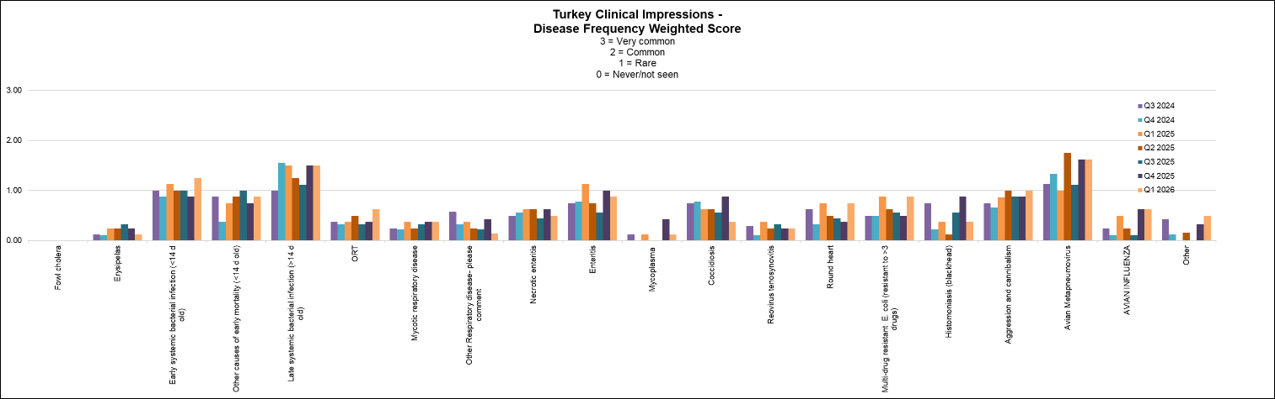
Graph on the next page depicts the frequency of the conditions seen in the flocks. The most frequent 3 conditions seen this quarter were: aMPV, early systemic bacterial infection (<14 d old), and late systemic bacterial infection (>14 d old) and enteritis.
AHL
Similar number of cases (from previous quarter):
- Early systemic bacterial infection (<14 days old)
Increased number of cases (from previous quarter):
- Avian metapneumovirus – Type B and Type A (vaccine derived: Turkey Iowa SEP-DKI-2024).
- Mycotic respiratory disease – Pneumonia.
- Coccidiosis/ Parasitism – Nematodes.
- Tibial dyschondroplasia.
- Reovirus – Minnesota TARV-MN3 field strain.
Decreased number of cases (from previous quarter):
- Late systemic bacterial infection (>14 d old) – E. coli isolated in pure culture.
- Bacterial pneumonia – Pneumonia and pleuritis.
No cases diagnosed this quarter:
- Fowl cholera (Pasteurella multocida).
- Erysipelas.
- Other causes of early mortality (<14 days old, starve out / dehydration).
- ORT (Ornithobacterium rhinotracheale).
- Enteric disease.
- Necrotic enteritis.
- Histomoniasis.
- Salmonellosis.
- Rickets.
- Condemnations.
- DOA.
- Mycoplasma.
Other diagnostic findings:
Chondrodystrophy, bacterial osteomyelitis, ventriculitis, tenosynovitis, lymphoplasmacytic tenosynovitis, tendon rupture, atherosclerosis, dissecting aortic aneurysm and ingluvitis.
Salmonellosis (Salmonella isolation)
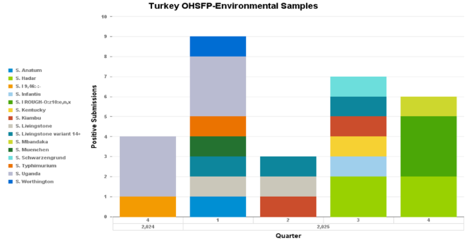
Animal Health Laboratory (AHL) Salmonella isolations in Turkeys from OHSFP environmental testing are summarized by quarter periods Jan-Mar, Apr-Jun, Jul-Sep, Oct-Dec of 2025 and Jan-Feb of 2026 (Figure1).
From December 1st, 2025, to February 28th, 2026, AHL tested 311 OHSFP environmental submissions and 1363 samples from turkeys. There were no positive samples (no figure).
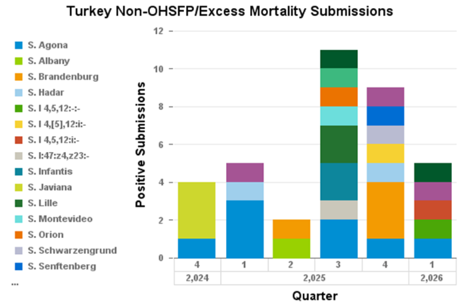
There were 7 positive isolates outside of OHSFP environmental testing in turkeys between December 1st, 2025, to February 28th, 2026. The species were 2 S. Typhimurium, 2 S. I 4,5, 12: -: -, 1 S. Agona, 1 S. Uganda, and 1 S. I 4,5, 12: i:- (Figure 2).
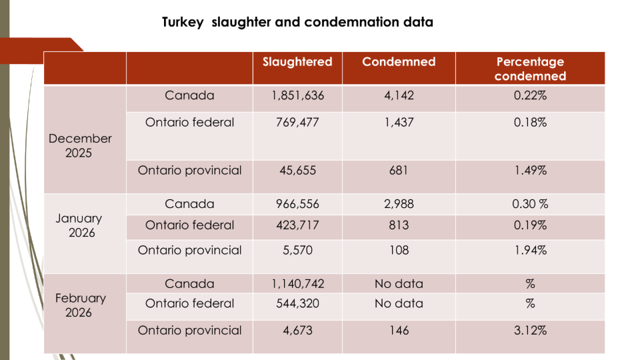
Slaughter data (December 2025- February 2026)
Condemnation conditions:
Provincial slaughter– top 3 main conditions listed for this quarter were: peritonitis, hepatitis and abscesses
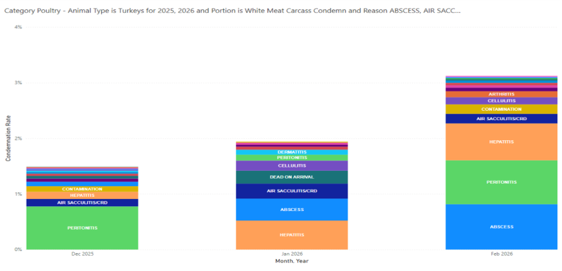
Federal slaughter (CAHSS Federally Inspected Slaughter Data)
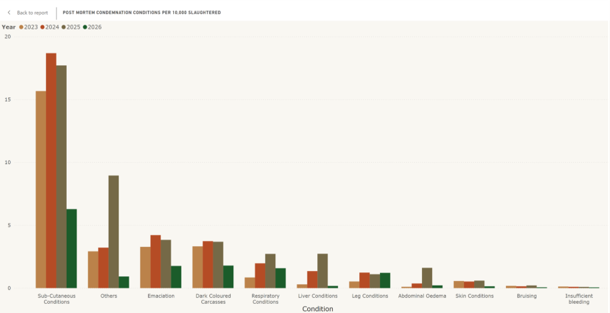
Top 3 main conditions listed for this quarter were: subcutaneous, others, emaciation and dark coloured carcasses
Small Flock
Chickens:
AHL: Diagnoses at AHL included intestinal parasitism (coccidiosis, nematodes, cestode), Marek’s disease, neoplasia (lymphoid neoplasia, suspect squamous cell carcinoma), vent trauma/cannibalism, peritonitis/salpingitis (including internal lay), bacterial septicemia (E. coli), IBV, emaciation, and cardiac dilation with vasculitis.
Gamebird/Ratites:
AHL: No cases submitted this quarter.
Waterfowl:
AHL: Two duck and 1 goose cases submitted this quarter.
- Pekin Duck – amyloidosis, granulomatous splenitis.
- Muscovy Duck – necrotizing enteritis, tenosynovitis.
- African Pygmy Goose – feather folliculitis/pulpitis.
Turkey:
AHL: No cases submitted this quarter.
Pigeon:
AHL: Two cases submitted this quarter.
- Oviduct adenocarcinoma
- Suspect ulcerative bacterial enteritis
Practitioners: Information provided with the clinical impression in chickens:
Frequency of conditions seen in practice:
Common: Trauma, ectoparasitism.
Rare: Other (obesity, beak malocclusion).
Not seen: Intestinal parasitism, Marek’s disease, other neoplasia, GI impaction, vent trauma, pododermatitis, peritonitis/salpingitis, bacterial septicemia, pneumonia/airsacculitis, FLHS, urate nephrosis/ visceral urates/articular urate deposits, ascites, ILT, histomoniasis, erysipelas, toxins, Mycoplasma, and aMPV.
Changes since last quarter: stable conditions: Marek’s disease, GI impaction, vent trauma, peritonitis/salpingitis; increased cases of ectoparasitism, trauma, other, decreased cases of intestinal parasitism, other neoplasia, pododermatitis.
Poultry research from Ontario and beyond
Thank You! We thank the following poultry veterinarians who completed the veterinary survey:
Dr. Tim Abolarin, Dr. Elizabeth Black, Dr. Joanne Dias, Dr. Daniella Di Pirro, Dr. Fernando Salgado-Bierman, Dr. Shahbaz Haq, Dr. Elana Huong, Dr. Anastasia Novy, Dr. Mike Petrik, Dr. Joanne Rafuse, Dr. Nahal Ramezani, Dr. Ben Schlegel, Dr. Chanelle Taylor, Dr. Brenna Tuer, Dr. Alex Weisz, and Dr. Jessalyn Walkey. Small Flock: Dr. Amari Patel.