
Ontario Animal Health Network (OAHN) Swine Network Quarterly Veterinary Report
Pseudorabies (PRV) Update
On April 30, 2026, the U.S. Department of Agriculture’s Animal and Plant Health Inspection Service (APHIS) National Veterinary Services Laboratories (NVSL) confirmed a detection of antibodies to pseudorabies virus (PRV) in a small commercial swine facility in Iowa. The confirmation was made using ELISA and latex agglutination testing and was identified through routine testing rather than pre-movement surveillance.
Initial traceback efforts indicate that the five affected boars originated from an outdoor facility in Texas, where animals from that herd also subsequently tested positive for pseudorabies. APHIS is currently working with officials in both Iowa and Texas to expand traceback efforts and identify any additional potential exposures.
This detection marks the first known case of pseudorabies in commercial swine since 2004, when the disease was officially eradicated from the U.S. commercial swine industry. PRV continues to be prevalent in feral swine populations across the United States, and occasional spillover of infection into outdoor production herds remains possible where contact with feral swine occurs. APHIS is working closely with the Iowa Department of Agriculture and Land Stewardship and the Texas Animal Health Commission to better understand the detection and prevent further spread.
Importantly, this detection does not pose a risk to consumer health and does not affect the safety of the commercial pork supply. However, there may be limited, short-term impacts on exports of U.S. swine and swine genetics. Pseudorabies is a contagious viral disease of livestock and other mammals, but pigs are the only natural hosts. While PRV can infect most mammals, humans, horses, and birds are considered resistant.
Source: (USDA-APHIS. (2026, April 30). USDA Confirms Pseudorabies in Swine Herds in Iowa and Texas. U.S. Department of Agriculture, Animal and Plant Health Inspection Service. https://www.aphis.usda.gov/print/pdf/node/8128. USDA-APHIS. (2026, April 30). Pseudorabies confirmed in U.S. commercial swine herd. National Hog Farmer. https://www.nationalhogfarmer.com).
Porcine Epidemic Diarrhea Virus (PED) and Porcine Deltacoronavirus (PDCoV) Ontario Update
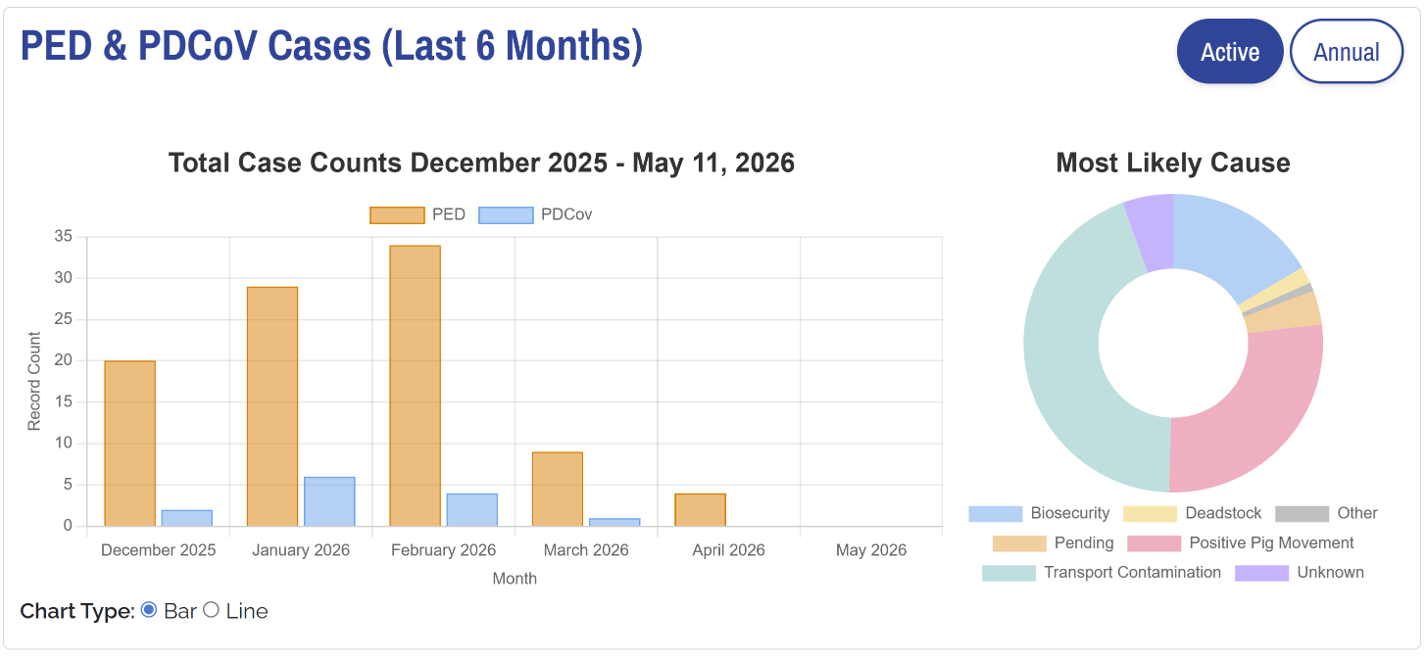
Jessica Fox from Swine Health Ontario (SHO) provided an update on PED and PDCoV during the quarter. During Q1 of 2026, there were a total of 72 new PED cases, 19 of which were movement related. There were also 11 new PDCoV cases, 7 of which were movement related. Of these cases reported during this quarter, 11 of the PED cases and 1 of the PDCoV cases have been closed. This quarter was particularly severe in terms of new porcine coronavirus cases, and many have attributed this large spike in cases because of a particularly harsh winter.
As producers spread manure this spring, SHO would like to encourage everyone to stay vigilant with biosecurity, and to be mindful of the risks associated with manure spreading and handling.
OAHN Veterinary Clinical Impression Survey Veterinary Comments
Dr. Maggie Henry provided an overview of the practitioner survey for Q1 2026. There has been excellent participation over the past few quarters, and 17 respondents this quarter! Thank-you to all the practitioners that responded, as your input is extremely valuable to the network and the industry!
The most dramatic increase reported this quarter was in the digestive diseases. Specifically, 88% of practitioners reported an increase in PED and 70% of practitioners reported an increase in PDCoV in Q1 of 2026. Practitioners noted a large increase of new outbreaks in herds, as well as some more challenging eliminations. It was noted by some practitioners that the harsh winter weather resulted in failure of important biosecurity measures, which likely contributed to the increase in disease this winter. 23% of responding practitioners also reported an increase in Rotavirus this quarter.
In terms of respiratory disease, 58% of practitioners perceived an increase in PRRS in breeding herds, and 37% perceived a PRRS increase in growing herds. 35% of respondents perceived an increase in Influenza this quarter. These increases could also likely be attributed to the harsh winter conditions this quarter and the resulting decrease in biosecurity vigilance mentioned above. As a result of the increases in these respiratory diseases, there were also increases noted in some of the multi-systemic pathogens – erysipelas (29%), PCV2 (23%), and exudative epidermitis (23%). These may be attributed to the increased disease pressure of some of these respiratory pathogens.
Animal Health Laboratory Immediately Notifiable Disease Review
Dr. Bukunmi Odebunmi from OMAFA provided a summary of the Influenza and Salmonella cases received by the AHL during Q1 of 2026.
Influenza A (IAV)
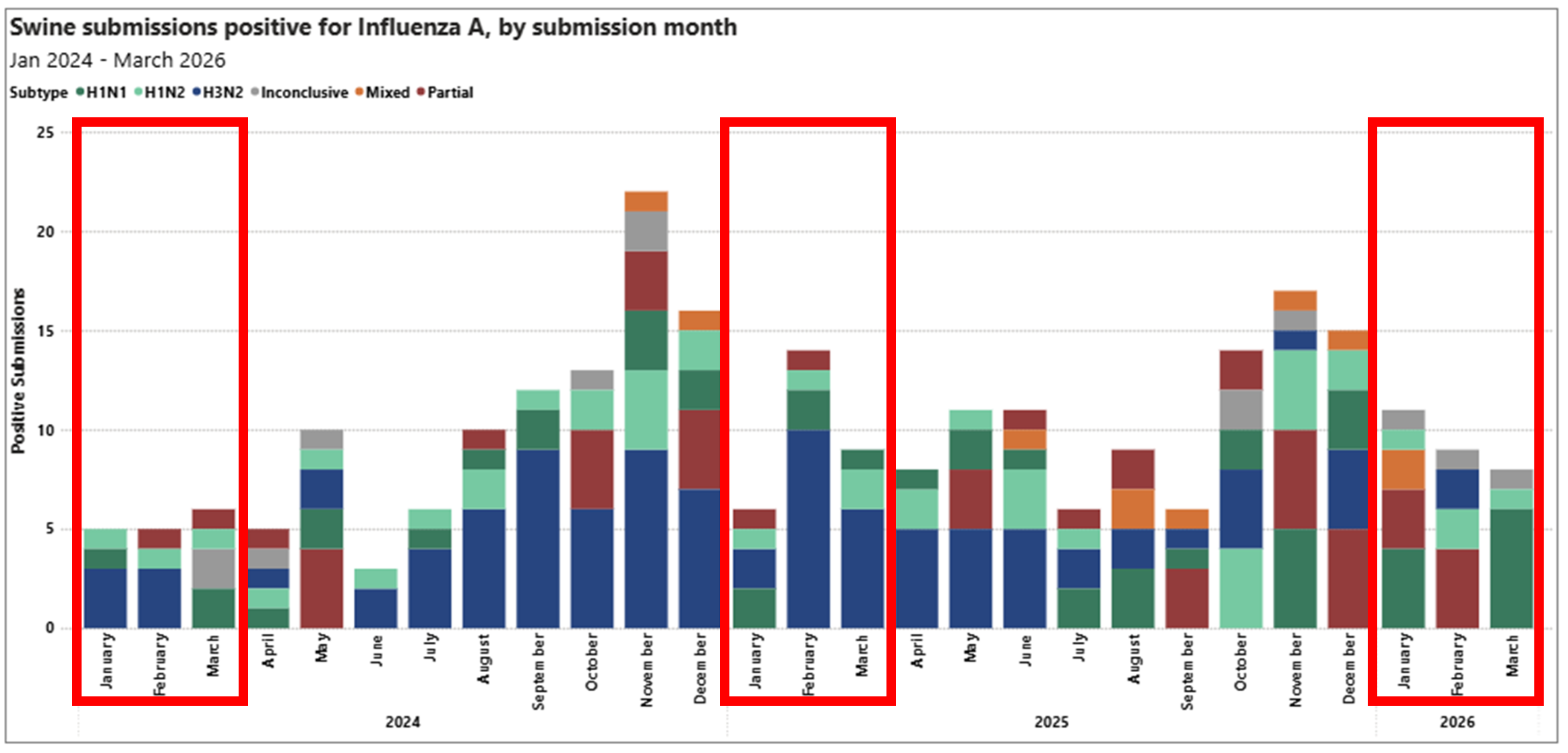
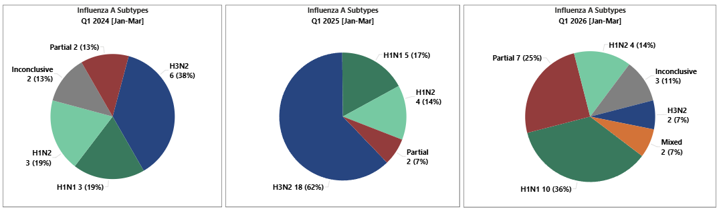
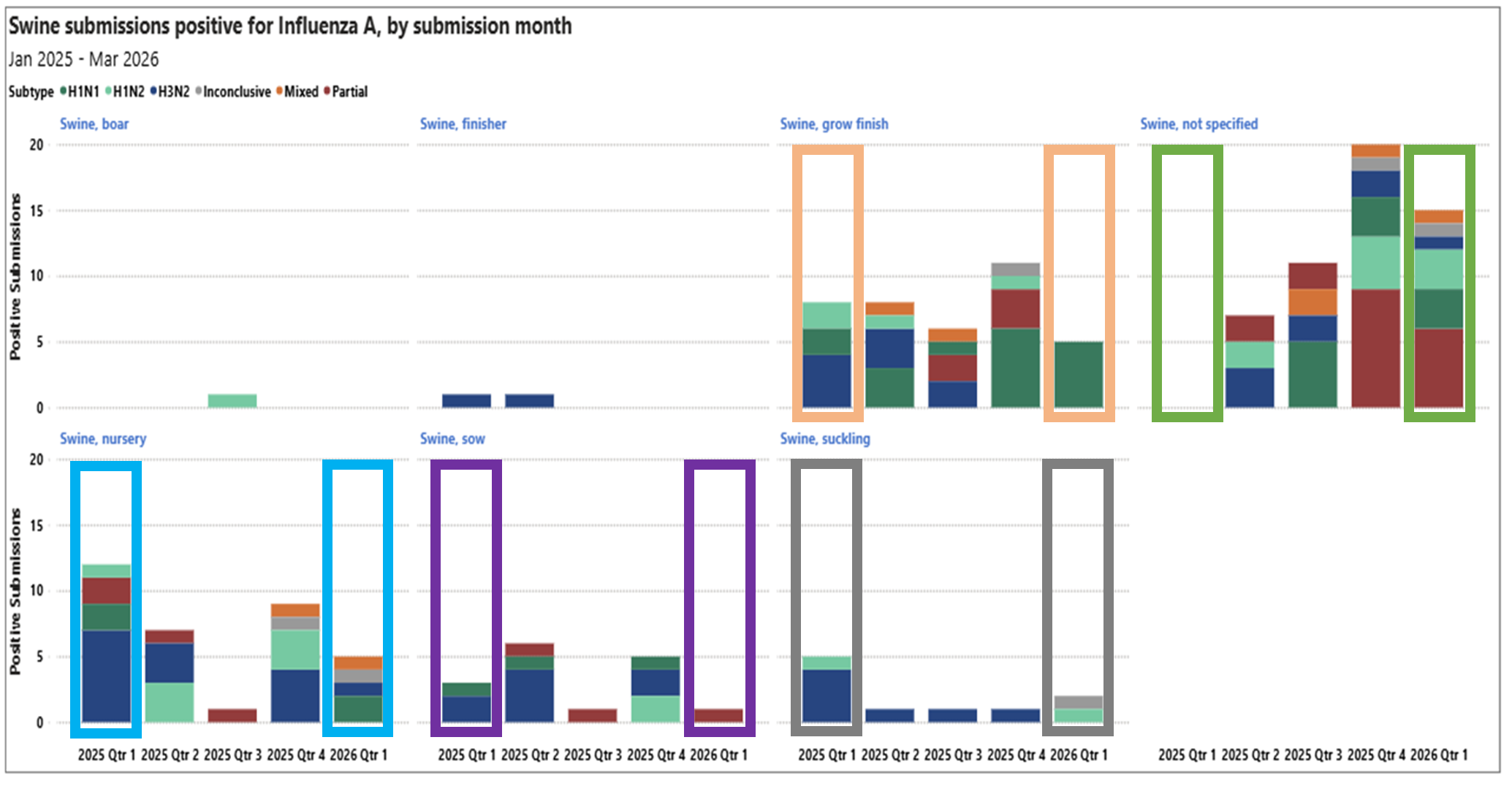
For Q1 of 2026, there were 28 positive submissions, which is lower than Q4 of 2025, as well as Q1 of 2025. This quarter, the predominant subtype was H1N1, making up 36% of the positive submissions. All of these H1N1-positive submissions were of the pandemic clade. Most of these detections were from a “non-specified” age group, followed by the grow-finish age group. This emphasizes the importance of including pig age information in your submission form.
Salmonella
The positive submissions were fairly consistent throughout the duration of the quarter. There were more positive submissions this quarter compared to Q1 of 2025 and Q4 of 2025. Most of the positive submissions this quarter reported gastrointestinal clinical signs. The most commonly isolated serotype was the monophasic Salmonella Typhimurium variant, which has been consistent for the previous 4 quarters. Most of the positive submissions this quarter were isolated from nursery age pigs.
Laboratory Diagnostic Reports
Animal Health Laboratory (AHL)
Dr. Rebecca Egan from the Animal Health Lab (AHL) provided an update on pathology cases received by the lab during Q1 2026. The AHL received a total of 1,554 swine cases during Q1 2026. Of these, 103 cases had a pathology component. A good (75%) or adequate clinical history was included for 93% of this quarter’s pathology cases, which is lower than the last several quarters. Age group and PID inclusion rates for Q1 were good at 93% and 85%, respectively.
Practitioners are strongly encouraged to include an informative clinical history and age group for all pathology submissions (it can be very succinct).
Trends and interesting cases from 2026 Q1 are as follows:
- Influenza A-positive case numbers in Q1 2026 were lower (43 cases) than in the previous quarter (2025 Q4: 57 cases), as well as Q1 2025 (68 cases). H1N1 was dominant (25 cases; 19 typed as pandemic and 6 as classical [5 beta and 1 alpha]), followed by H1N2 (19 cases) and H3N2 (9 cases).
- One porcine astrovirus-type 4 positive submission. Coughing piglets in late lactation and into nursery. PCR negative for influenza A and positive for PAV-4 (Ct 16). There was no pathology component for this submission.
- PRRSV was detected by PCR in 191 cases (171 diagnostic, 23 monitoring, 1 research), representing an increase from 172 positive cases in 2025 Q1 and decrease from 200 cases in 2024 Q1. Pathology cases with a PRRSV associated pneumonia diagnosis was steady at 20, 21, and 20 cases in Q1 2024, 205, and 2026, respectively.
- In Q1 2026, there were 33 porcine sapovirus PCR-positive submissions, representing 73% of the submissions tested. In the previous 4 quarters, positive submissions were 16 (32% of cases tested), 20 (51% of cases tested), 26 (68% of cases tested), and 21 (48% of cases tested) in Q1, Q2, Q3, and Q4 of 2025, respectively. Of the 45 submissions tested in Q1 2026, 3 submissions for the OAHN Swine Network Sapovirus Testing project, and in 2025 there were 5 tested in Q4, and 3 tested in Q3.
- There was a total of 10 abortion cases in 2026 Q1, compared to 8, 10 and 12 cases in Q1 of 2023, 2024, and 2025, respectively. Of these, 7 cases had a definitive or presumed bacterial component, 2 were idiopathic, and 1 was PCR-positive for PCV-3 (tissues from 2 fetuses, Ct=24.26 and Ct=32.48), with no corresponding histologic lesions. Bacterial agents associated with abortion were Streptococcus suis (3), Actinobacillus rossii (1), Streptococcus dysgalactiae subspecies equisimilis (2), and E. coli (3).
- Salmonella enterica serotype Salmonella Muenchen was isolated from enrichment in a case of neonatal diarrhea (have not seen this serotype in the AHL data going back as far as 2022). This fecal swab was from piglets 1-3 days of age and was rotavirus C positive with high viral load. ETEC was negative. Histopathology was not performed.
Ontario Slaughter Statistics
Dr. Christine Pelland provided a summary of federal and provincial slaughter condemnation reports for Q1 of 2026.
Federal Slaughter Statistic Summary (Q1 Aggregate)
When comparing Q1 of 2026 to Q4 of 2025, there was an increase in total number of animals slaughtered (19,567 more animals), with 112 more animals condemned this quarter. There was a reduction in the total number of condemns due to peritonitis (-4.6%) and abscesses (-3.5%). However, there was an increase in number of condemns due to enteritis (+5.7%), moribund (+1.7%), and emaciation (+1.2%). Dr. Pelland noted that the increased disease pressure this quarter could be what was driving this increase in inflammatory conditions noted on the slaughter condemns this quarter.
Provincial Slaughter Statistic Summary
There was a higher overall number of condemns in Q1 2026 compared to Q1 2025. Dr. Pelland noted that parasitic livers continue to be the most frequent cause of condemnation at the provincial level, which has been consistent over the past several quarters. Abscesses are increasing in prevalence over time and is at a similar prevalence to inflammatory conditions. Like what is described above, the increase in disease pressure this quarter could be contributing to this increase in inflammation seen at slaughter.
CanSpotASF Surveillance Update
An update on the CanSpotASF surveillance submissions. Ontario samples submitted for CanSpotASF testing in 2026 Q1 included:
- Laboratory samples submitted by vets/pathologists: 22
- Provincial Abattoirs: 4
- Federal ON Abattoirs: 55
- Invasive Wild Pigs: 0
All samples tested under the CanSpotASF surveillance program have yielded negative ASF results.
OAHN Projects- Now Accepting Samples!
Dr. Rebecca Egan provided an update on the current OAHN swine projects. Reminder project #1 on PCV-2 and project #2 on Sapovirus are both now open and accepting samples! Please consider both when completing herd visits and or performing PM exams. Both projects will be running until June 2026 or until sample quotas are met, so practitioners are encouraged to participate when they have eligible cases.
Project #1- This project aims to assess Porcine Circovirus type 2 (PCV2) prevalence in the Ontario herd, specifically with respect to the different PCV2 subtypes. PCV2 PCR-positive samples submitted to AHL are eligible, and this project will sequence these samples to determine subtype. These results will allow for better understanding of the distribution of different PCV2 subtypes within the province. A short survey will accompany these submissions to better understand the clinical picture of each case. There have currently been 40 cases tested thus far, with the following results: 20% PCV2a, 50% PCV2d and 27.5% un-typeable (due to concurrent detection with PCV-1 in 5 of these 11 cases).
Project #2- This project focuses on the neonatal diarrhea complex and the role of Sapovirus in these cases. Eligible cases will be those with piglets less than 20d of age presenting with a clinical scour and an accompanying Sapovirus PCR-positive result. A specific AHL submission form and samples (3 fecal samples PER PIG) are required for enrollment in this project, in addition to completion of a short survey by the submitting veterinarian. Links to the submission form and vet survey can be found on the OAHN swine website. This project aims to provide a better understanding of how Sapovirus contributes to neonatal diarrhea cases, especially amongst other common pathogens. There have been 11 cases tested to date. Of these cases, 18% have tested positive for Sapovirus PCR and 36% of cases being inconclusive on Sapovirus PCR (Ct from 34 to 40). All of these positive and inconclusive cases have had co-infection with Rotavirus. Sapovirus ISH will be performed to assess for presence/distribution of viral antigen in intestinal lesions. There are still submissions needed for this project, so if you have a case that fits the above description, please consider submitting. The study will cover all testing, totaling roughly $300-400 per pig!
Any questions can be directed to Dr. Rebecca Egan eganr@uoguelph.ca.
Senecavirus A (SVA) Ontario Update
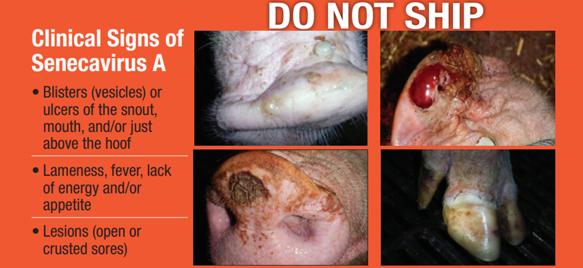
The warm weather is here and there have already been reports of vesicular type lesions found on pigs at Ontario assembly yards. SHO and OAHN would like to encourage practitioners and producers to continue to monitor herds for clinical signs, as these can be extremely subtle. Older pigs tend to present with vesicular lesions on the snout and/or coronary band(s). In a sow barn, infections can present as a very subtle scour. If a swine producer has any suspicion that there may be SVA in a swine herd, they are urged to contact their vet and the CFIA for follow-up steps!
Producers and veterinarians in all provinces need to understand that lesions can be mild and hard to notice in some animals. Diligence is required to check all animals for SVA type lesions including blisters, ulcers on the snout, ears, face, on the coronary band or between the claws on the feet before shipping them for slaughter, cull markets and/or directly for export to the USA. (Source Poster below: Swine Health Ontario)
International Disease Topics Of Interest Summary
Dr. Conor Voth reported on some interesting international disease surveillance reports and new research.
African Swine Fever
Europe: Wild Boar Cases Climb
Between February 26 and April 2, 2026, four European countries (Moldova, Romania, Serbia, and Ukraine) reported 27 ASF outbreaks in domestic pigs to EU ADIS — a 1.7-fold decrease from the previous month. However, wild boar cases increased, with 16 European countries reporting 1,047 outbreaks (up from 923), led by Poland (357), Italy (138), and Lithuania (132).
Germany confirmed its first ASF case in wild boar in the Hochsauerland district of North Rhine-Westphalia on March 3, indicating geographic spread within the region. Since June 2025, over 37,800 wild boar have been tested, with 345 testing positive. Surveillance has been intensified using canine teams and drones.
Spain: Outbreak Expands, and €7 Million Emergency Contract Activated
The Catalonia outbreak continues to evolve. As of April 1, the total reached 42 outbreaks and 241 ASF-positive wild boar across 10 municipalities. By late April, 16 new wild boar cases were confirmed in a single week, including one in Castellbisbal — previously considered low-risk and now requiring inclusion in Spain’s high-risk area, bringing affected municipalities to 19. Since the first detection in November 2025, 4,030 wild boar have been analyzed, with 284 testing positive. No domestic pig cases have been detected.
Sequencing of the Spanish outbreak strain by the Institute for Research in Biomedicine (IRB) Barcelona revealed the strain shows no similarity to any of the 17 ASF strains stored at IRTA-CReSA or to more than 800 strains in the public database. It exhibits 27 point mutations and a significant deletion, and has been assigned to a new group, 29. Current data does not allow confirmation that the strain came from any laboratory.
Asia: South Korea Faces Significant Challenges
South Korea is experiencing a particularly difficult phase. So far in 2026, 24 ASF outbreaks have occurred — compared to 17 outbreaks in 2024 and 2025 combined. Over 150,000 pigs have been culled as of March 30, with at least 148,000 culled on 24 farms in the first three months of 2026 alone. Several infected farms had approximately 20,000 pigs on-site. There have also been 1,022 wild boar found infected in 2026, all in the northeastern peninsula.
ASF genetic material was detected in porcine plasma protein–derived feed ingredients and compound feed. However, no infection was confirmed at farms where positive feed samples were identified, and a direct link remains unproven. Authorities still recalled and initiated destruction of over 490 tons of potentially contaminated feed. Viral material was also detected on workers’ clothing, hands, mobile phones, and shoes across multiple farms, indicating potential human-mediated contamination pathways.
Source: (Departament d’Agricultura, Ramaderia, Pesca i Alimentació (DARPA). (2025, December 30). ASF in Spain: Tests indicate that it is a new strain not previously described. ter Beek, V. (2026, March 25). ASF South Korea: 150,000 pigs culled as virus found in feed. Pig Progress. https://www.pigprogress.net. Yustyniuk, V., Ochwo, S., Schulte, R., & Perez, S. (2026). Swine Disease Global Surveillance Report, March 3, 2026 – April 6, 2026. Swine Health Information Center & Center for Animal Health and Food Safety, University of Minnesota. https://www.cahfs.umn.edu).
Foot and Mouth Disease
SAT1 Serotype Expands Beyond Sub-Saharan Africa
Foot-and-mouth disease virus (FMDV) serotype SAT1 has demonstrated a notable and concerning expansion beyond its traditional geographic range. Historically confined to sub-Saharan Africa, with transmission largely maintained in endemic locations in East and Southern Africa, SAT1 has now expanded into Western Asia, North Africa, the Eastern Mediterranean, and parts of Europe. For FMDV, immunity is serotype-specific — meaning infection or vaccination against one serotype does not confer protection against another. Most vaccination programs in newly affected regions are designed around historically occurring serotypes O, A, and Asia-1, providing no cross-protection against SAT1.
Europe: First Greek Outbreak in 25 Years and Cyprus Expansion
Greece confirmed its first FMD outbreak in 25 years on March 16, 2026, when a private veterinarian observed clinical signs (excessive salivation, lameness, hoof lesions) at a mixed sheep, goat, and cattle farm in Pelopi on Lesvos. By March 30, a total of 282 cases had been identified — 24 in cattle, 193 in sheep, and 65 in mixed sheep–goat herds. Authorities established 3 km protection and 10 km surveillance zones, and implemented EU-mandated whole-herd culling, movement restrictions, slaughterhouse closures, and suspended milk sales. The outbreak triggered farmer protests and port blockades in Mytilene, with civil protection emergency measures activated.
Cyprus experienced expansion to 50 herds by March 29, with the SAT1 outbreak affecting primarily sheep, goats, and cattle across 47 farms in Larnaca and Nicosia districts. More than 30,000 animals were affected, with culling reaching 28,516 sheep and goats and 1,910 cattle. Vaccination was rapidly scaled up with over 1 million doses mobilized through EU support, achieving approximately 98% first-dose coverage in cattle and 76% in sheep and goats. Vaccines for pigs remain pending. Epidemiological investigations suggest the virus likely circulated undetected for several weeks among small ruminants with subclinical infection.
Asia: First SAT1 Detection in China
On April 2, 2026, China confirmed its first-ever detection of FMD serotype SAT1. The Chinese Ministry of Agriculture reported 219 cases in cattle across two locations in Gansu Province and the Xinjiang Uyghur Autonomous Region, involving a total of 6,229 susceptible cattle. This represents a notable change from the endemic serotypes O and A previously found in China and is particularly concerning because the country’s current vaccines offer no cross-protection against SAT1. Local governments implemented culling and disinfection measures, and the origin remains unknown — though Gansu and Xinjiang are pastoral areas, suggesting potential introduction via livestock trade routes or cross-border animal movement.
Israel reported continued SAT1 spread across five administrative districts (Golan, HaZafon, Haifa, HaMerkaz, HaDarom), with 26 outbreaks confirmed since January and 17 unresolved as of late March. Two cases were detected in wild mountain gazelles, indicating potential challenges for control. Kazakhstan carried out large-scale border vaccination targeting 330,000 cattle, over 500,000 small ruminants, and 9,000 pigs in regions bordering Russia.
Source: (Reuters. (2026, April 2). China reports 219 cases of foot-and-mouth cattle disease in northwestern region. https://www.reuters.com. Swine Health Information Center. (2026, April 16). FMDV serotype SAT1 spread raises concerns for U.S. swine industry. National Hog Farmer / Swine Health Information Center. https://www.swinehealth.org. Yustyniuk, V., Ochwo, S., Schulte, R., & Perez, S. (2026). Swine Disease Global Surveillance Report, March 3, 2026 – April 6, 2026. Swine Health Information Center & Center for Animal Health and Food Safety, University of Minnesota. https://www.cahfs.umn.edu.)
Improving Next-generation Sequencing for Detection of Emerging Swine Viruses
This project addressed a key limitation in detecting emerging swine viruses: while PCR is fast and accurate, it only detects known pathogens, leaving new or highly mutated viruses undetected. Next-generation sequencing (NGS) can identify multiple viruses simultaneously without prior knowledge of the pathogen, but its routine diagnostic use has been hindered because most genetic material in clinical samples is host or bacterial in origin, reducing sensitivity and raising costs.
The researchers developed a sensitive, cost-effective NGS method that removes host and bacterial ribosomal RNA from samples prior to sequencing, allowing viral genetic material to be more readily detected. Tested on 250 swine respiratory samples, the method identified viruses from 35 viral genera, improved detection and genome coverage of several viruses, and performed especially well for DNA viruses. The estimated cost was approximately $31.54 per sample, supporting earlier detection of emerging viruses and strengthened disease surveillance in the swine industry. Source: (Caserta LC. Improving Next-generation Sequencing for Detection of Emerging Swine Viruses. Project #24-012. Cornell University; posted April 10, 2026).
Comparative Pathogenicity of PCV2, PCV3, and PCV4 in Piglets
This study compared the pathogenic properties of three porcine circoviruses (PCV2, PCV3, and PCV4) in experimentally infected 3-week-old specific-pathogen-free (SPF) piglets. While PCV2 has long been recognized as a major swine pathogen, the newly discovered PCV3 and PCV4 represent emerging threats to the swine industry whose pathogenic mechanisms remain poorly understood. This research systematically evaluated clinical manifestations, tissue tropism, viral distribution, and immune responses across all three viruses to clarify their comparative threat levels.
All three viruses caused reduced growth in infected piglets, though with varying severity. PCV2 exerted the most suppressive effects on body weight gain, followed by PCV3 and PCV4. Common clinical signs across all infected groups included diarrhea (appearing by day 4), mild skin rashes (days 4–8), respiratory symptoms, loss of appetite, and lethargy. However, the duration and severity of these signs differed notably. PCV2-induced skin lesions persisted for 27–32 days compared to 18–20 days in PCV3-infected piglets and 18–20 days in PCV4-infected piglets. Body temperature remained normal (38–40°C) in all groups, indicating the infections did not trigger febrile responses.
PCV2 and PCV4 demonstrated significantly higher viral loads in oral and rectal swabs compared to PCV3, reaching peak copy numbers of 10⁵–10⁶ copies/μL. PCV3 maintained consistently lower viral titers (10³–10⁴ copies/μL), suggesting weaker replication efficiency despite comparable pathological outcomes, possibly due to distinct tissue tropism and transmission mechanisms.
Histological examination revealed organ-specific damage patterns. PCV2 caused myocardial fiber edema, inflammatory infiltration, hepatic necrosis, and lymphoid tissue depletion characteristic of post-weaning multisystemic wasting syndrome (PMWS). PCV3 exhibited focal hepatocyte necrosis with cardiac irregularities and renal stress, with pathological scores comparable to PCV4 despite lower viral replication. PCV4 induced severe myocardial cell damage and cardiac fibrosis, along with extensive multiorgan hemorrhaging and bile duct damage. Critically, both PCV3 and PCV4 were detected in brain tissue, suggesting potential neurological effects absent in PCV2 infections—a finding with significant implications for disease management.
Each virus triggered distinct cytokine profiles. PCV2 infection resulted in immunosuppression characterized by decreased interferon-α (IFN-α), tumor necrosis factor-α (TNF-α), and interleukin-10 (IL-10) levels in cardiac and lymphoid tissues—consistent with documented immunosuppressive properties. In contrast, PCV3 and PCV4 infections showed heightened cytokine responses with elevated IFN-α in kidneys and brains, and consistent antibody production peaking at days 21–28 post-infection. This suggests PCV3 and PCV4 may not induce overt immunosuppression but rather trigger complex immune modulation.
This study represents the first successful isolation and in vitro propagation of PCV4 from experimentally infected piglets, with PCV4 demonstrating more efficient replication in cell culture than PCV3. Isolated viruses maintained 99.94% genomic sequence identity to original clones, confirming their infectivity and pathogenicity. Source: (Zheng J, Li X, Lv X, Han Y, Zhang X, Chen S, Zhang F, Ren L. Comparative Pathogenicity of PCV2, PCV3, and PCV4 in Piglets: Insights Into Clinical, Pathological, and Immunological Features. Transboundary and Emerging Diseases. 2025;72(7). PMCID: PMC12267972).
How can you Participate in OAHN?
Look for the 2026 Q2 veterinary clinical impression survey that will come out the first week of July via an email through the OASV listserv.
If you are a practicing vet that sees swine in Ontario, please complete this survey when the email reminders are sent out through the OASV listserv.